Stylised white mountain peak with a yellow flag on a curved white pole planted at the summit, set against a slate-blue background and framed by a dark border.

Thermal

Providing a level of thermal protection without the bulk

Engineered to be breathable whilst still offering a level of thermal protection.

The single layer, heat-retentive design allows for greater dexterity - making thermal items adaptable across multiple winter sports and outdoor activities.

Stylised white mountain peak with a yellow flag on a curved white pole planted at the summit, set against a slate-blue background and framed by a dark border.

Packable

High performance whilst being compact and stowable

Products designed to compress down and stow away when you don't need them, and deploy at a moments notice for when you do.

Using packable items reduces the need for a large pack, keeping you lighter on the trail and helping with marginal gains.

Stylised white mountain peak with a yellow flag on a curved white pole planted at the summit, set against a slate-blue background and framed by a dark border.

PitchLite

The lightest way to pitch a tent

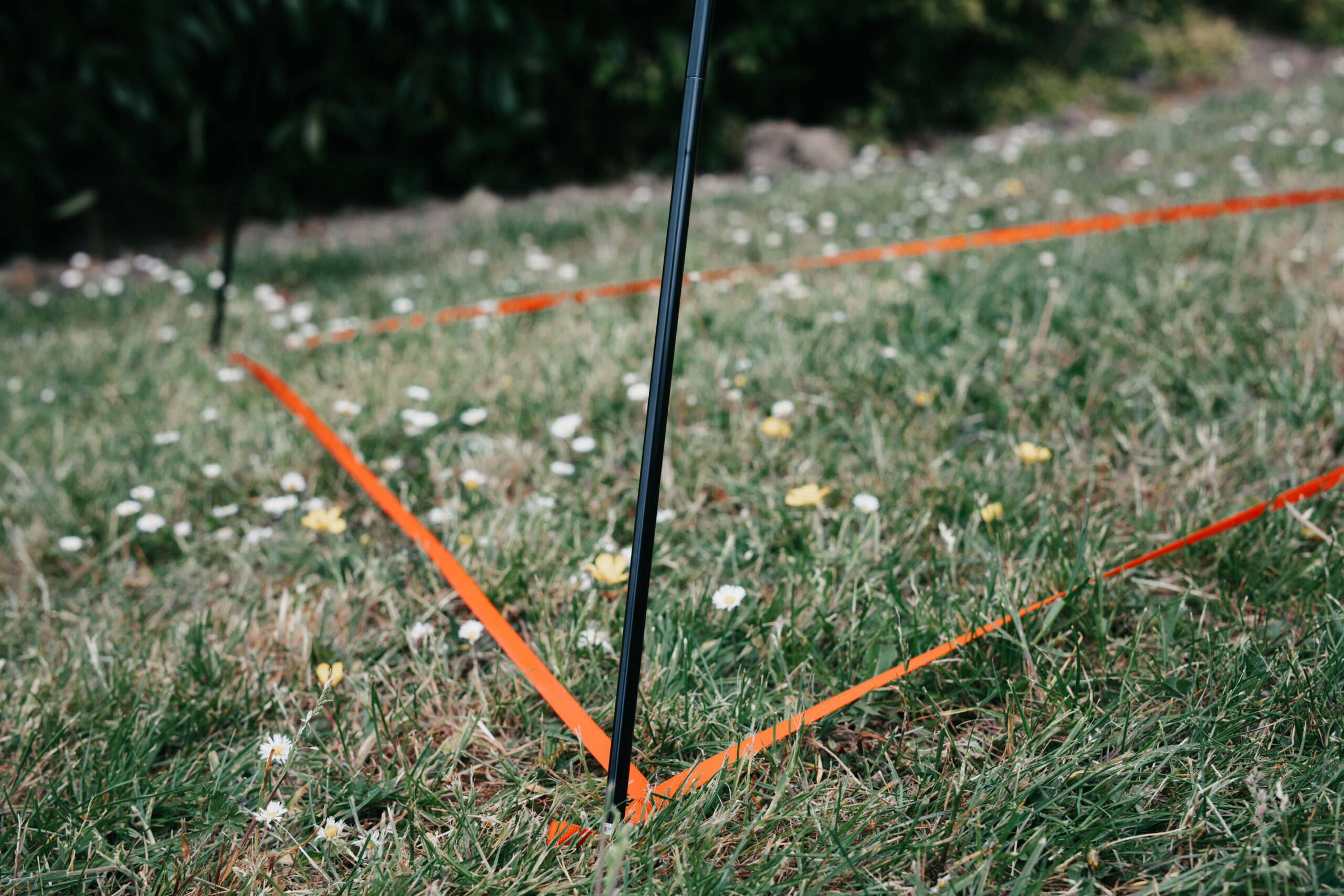
Products with this icon are compatible with the PitchLite system, enabling flysheet‑only pitching for fast, lightweight shelter deployment.

  • Lighter pack weight
  • Smaller carry size
  • Maximised flysheet space
Rounded rectangular product graphic for PrimaLoft Gold Insulation ECO showing a white insulation cross-section with water droplets labelled water resistant, a 55% recycled content icon, a red heat cone labelled thermally efficient, an arrow labelled compressible and the text fast drying, plus the PrimaLoft logo
Stylised white mountain peak with a yellow flag on a curved white pole planted at the summit, set against a slate-blue background and framed by a dark border.

FlexiPorch

Variable configurations for better living solutions

Features an adjustable toggle system that allows you to tailor the porch size to suit alternating situations and storage needs.

  • Customisable living space
  • Stablises groundsheet walls
  • Maximise storage or living space
Rounded rectangular product graphic for PrimaLoft Gold Insulation ECO showing a white insulation cross-section with water droplets labelled water resistant, a 55% recycled content icon, a red heat cone labelled thermally efficient, an arrow labelled compressible and the text fast drying, plus the PrimaLoft logo
Stylised white mountain peak with a yellow flag on a curved white pole planted at the summit, set against a slate-blue background and framed by a dark border.

PoleLock

Add more stability in high wind environments

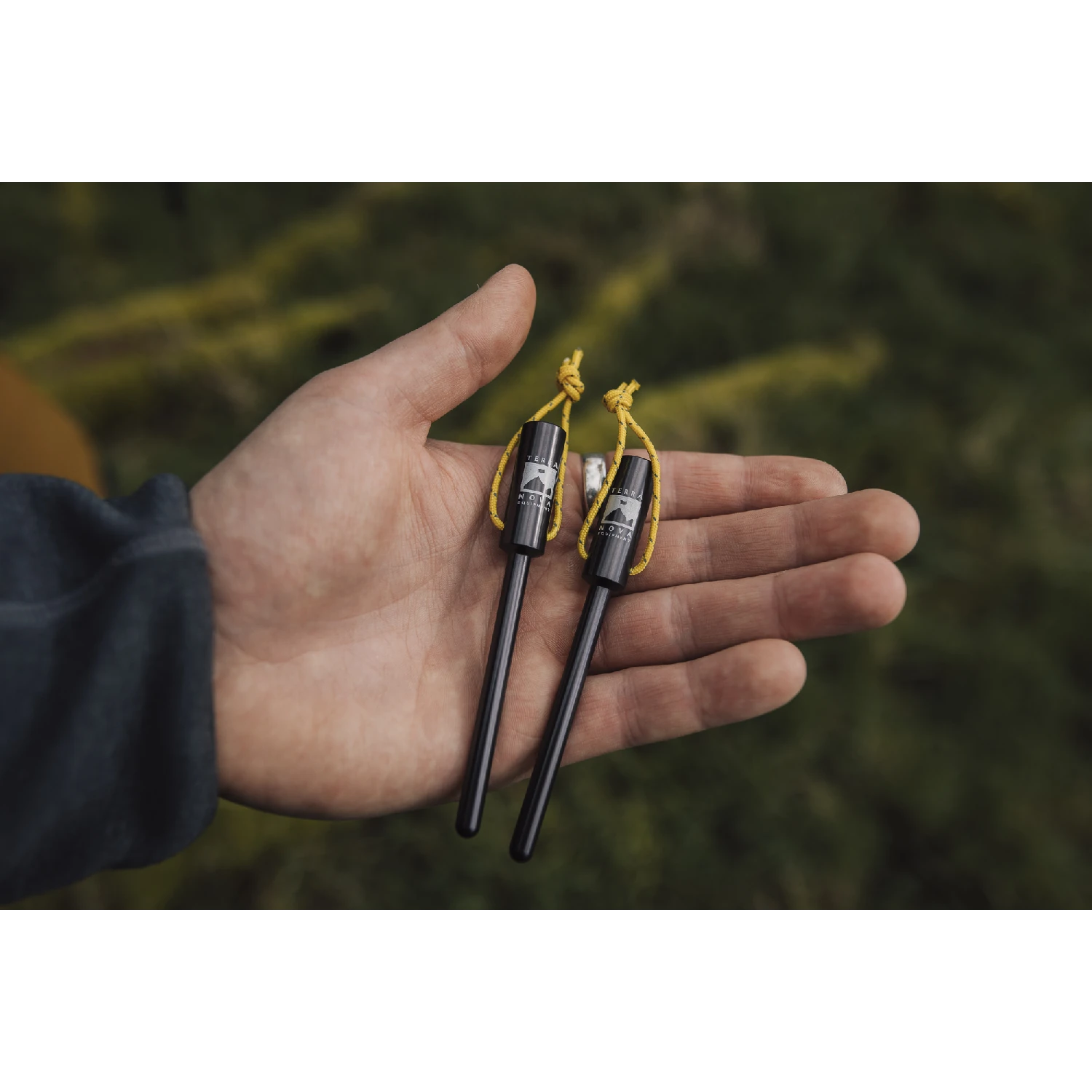
Products with this icon can be used with our PoleLock accessory, designed to add structural support to flysheet‑first pitching tunnels and non‑freestanding tents. Suitable for poles up to 9mm in diameter.

  • Additional Stability
  • Easier Pitching
  • Better Wind Protection
Stylised white mountain peak with a yellow flag on a curved white pole planted at the summit, set against a slate-blue background and framed by a dark border.

X-Dry Stretch

Waterproof, breathable, flexible

4‑way stretch waterproof fabric offering complete weather protection with enhanced flexibility, comfort, and freedom of movement

Engineered for the Elements

  • Waterproof & breathable membrane
  • Allows for greater dexterity
  • Retains warmth in cold, wet weather

From heavy downpours to freezing winds, X-Dry stretch ensures you stay perfectly dry and comfortably warm from the inside out

Join The Club

And get 10% off your first order.

From Everest to your local trail, we design for the extremes. Sign up for our newsletter to receive the latest from Terra Nova, Wild Country, and Extremities.

Stylised white mountain peak with a yellow flag on a curved white pole planted at the summit, set against a slate-blue background and framed by a dark border.

DAC Green Anodized Poles

Eco-conscious engineering from the world leader in tent pole technology.

We exclusively feature DAC Green Anodized poles in our premium tent range to deliver world-class strength and weight savings with a radically reduced environmental footprint.

Material: Exclusive TH72M aluminum alloy, providing the highest strength-to-weight ratio in the industry.

Green Technology: The Anodising process completely eliminates nitric and phosphoric acids, utilizing a closed-loop water recycling system to protect both the environment and the craftspeople who build them.

Ultralight Design: Precision swaged at both ends to shed every unnecessary gram without compromising structural integrity.

The gold standard for performance and a sustainable future.

Shop DAC Products
Shop DAC Poles
Stylised white mountain peak with a yellow flag on a curved white pole planted at the summit, set against a slate-blue background and framed by a dark border.

FastPack

Ultra-lightweight flexibility. Trim weight. Go further.

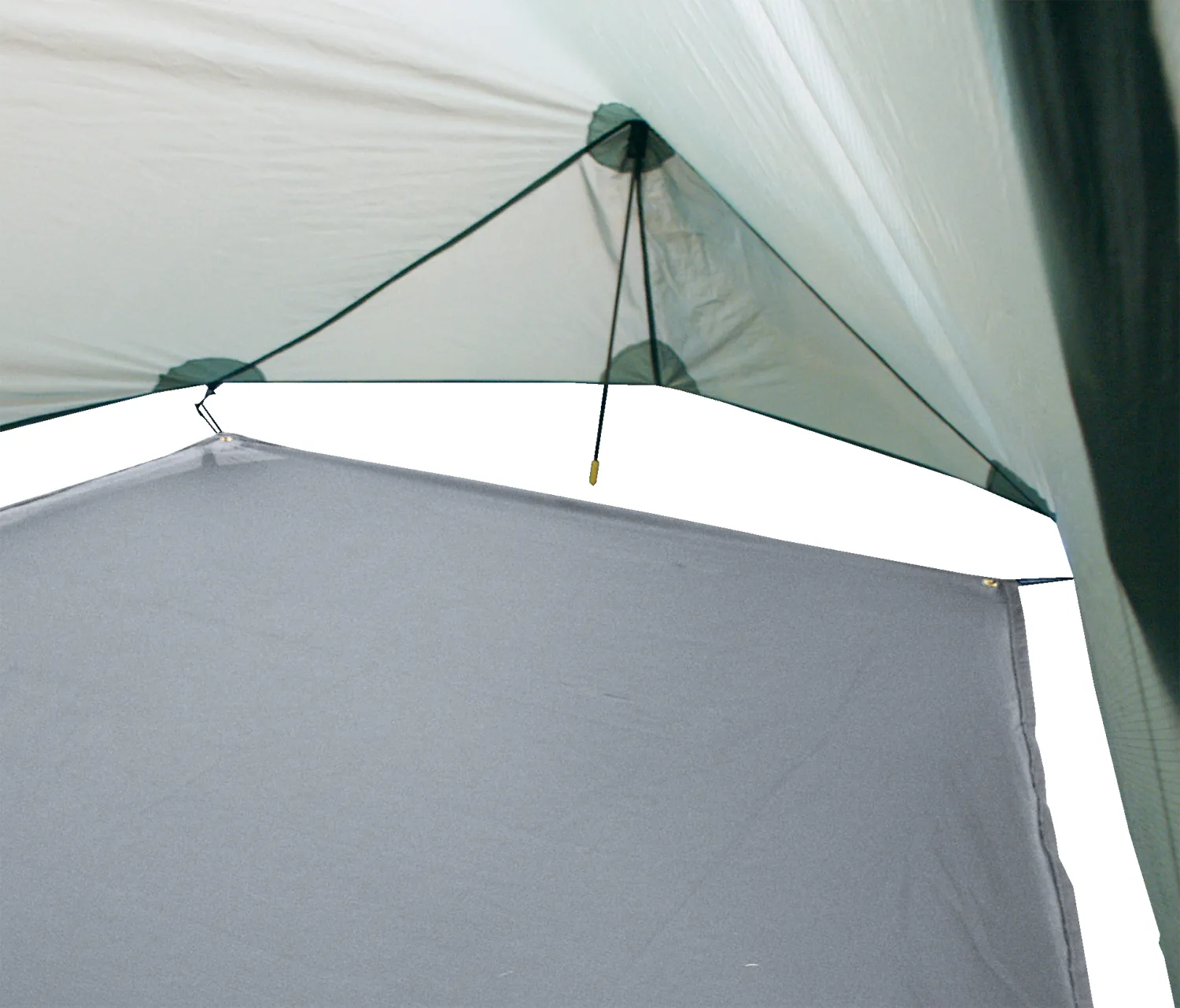
Designed by our product specialists to offer ultimate versatility for fast-paced adventures, the FastPack system allows you to dramatically reduce your rucksack’s weight and bulk. By using a dedicated footprint in place of an inner tent, you transform your shelter into a high-performance, minimalist waterproof bivi-style setup.

  • Modular Weight Saving: Leave the inner tent at home when conditions permit to shave significant grams and volume from your pack.
  • Weatherproof Protection: The system utilises a footprint that covers the entire area under the flysheet, including the porch, providing a clean, dry sleeping area.
  • Structural Integrity: The footprint is precision-engineered to provide the essential tension and anchor points required for the poles, ensuring the tent remains stable and secure.
Rounded rectangular product graphic for PrimaLoft Gold Insulation ECO showing a white insulation cross-section with water droplets labelled water resistant, a 55% recycled content icon, a red heat cone labelled thermally efficient, an arrow labelled compressible and the text fast drying, plus the PrimaLoft logo
Learn More

Worst Places to Pitch a Tent

Camping can be a great way to enjoy the outdoors and escape your busy life. However, pitching your tent in the first spot you come across isn’t the best idea. Some spots can turn out to be dangerous, disturb local wildlife or simply provide a lack of comfort. Discover the worst places to pitch a tent and make sure your next adventure is one to remember:

Worst Places to Pitch a Tent

– Somewhere illegal

Let’s start with the most obvious place where you shouldn’t camp. Somewhere that will lead to you getting in trouble with the police or the law. We always recommend checking if you are allowed to camp where you are planning to set up your tent for the night, for example, asking the landowner. The last thing you want to wake up to is an angry farmer, or to unzip your tent to find you are surrounded by a herd of cows.

– Near low-lying areas

Pitching your tent in low-lying areas like ditches, valleys or sunken areas may seem like a good idea to get out of sight, away from the wind and side rain, but this is never the case and will make your situation much worse. They can fill up with water very quickly and the water will easily find its way into your tent. The last thing you want to happen when out in bad weather is getting all your gear soaking wet.

– Near Rivers and Streams

Rivers and streams are very similar to low-lying areas. It might seem like a good idea to pitch near a river and fall asleep to the calming sound of flowing water. But a calm-flowing river can quickly turn into a raging, fast-flowing river when the wind and rain start picking up. If you pitch close to a river, you’re at risk of being washed away at night, and being stuck in a tent at night in a fast-flowing river is the last place anyone wants to be.

– Under trees

Pitching under trees is a no-go zone. Gravity is a great thing, but not if you’re pitched under a massive tree branch that has just snapped off the tree. Falling tree branches have killed and injured campers who chose a spot under a tree. Lightning strikes and wind gusts can easily break branches off trees and can even unroot them in a storm. Tree sap is also a big one to avoid. It will leave a sticky substance on your flysheet that is nearly impossible to clean off.

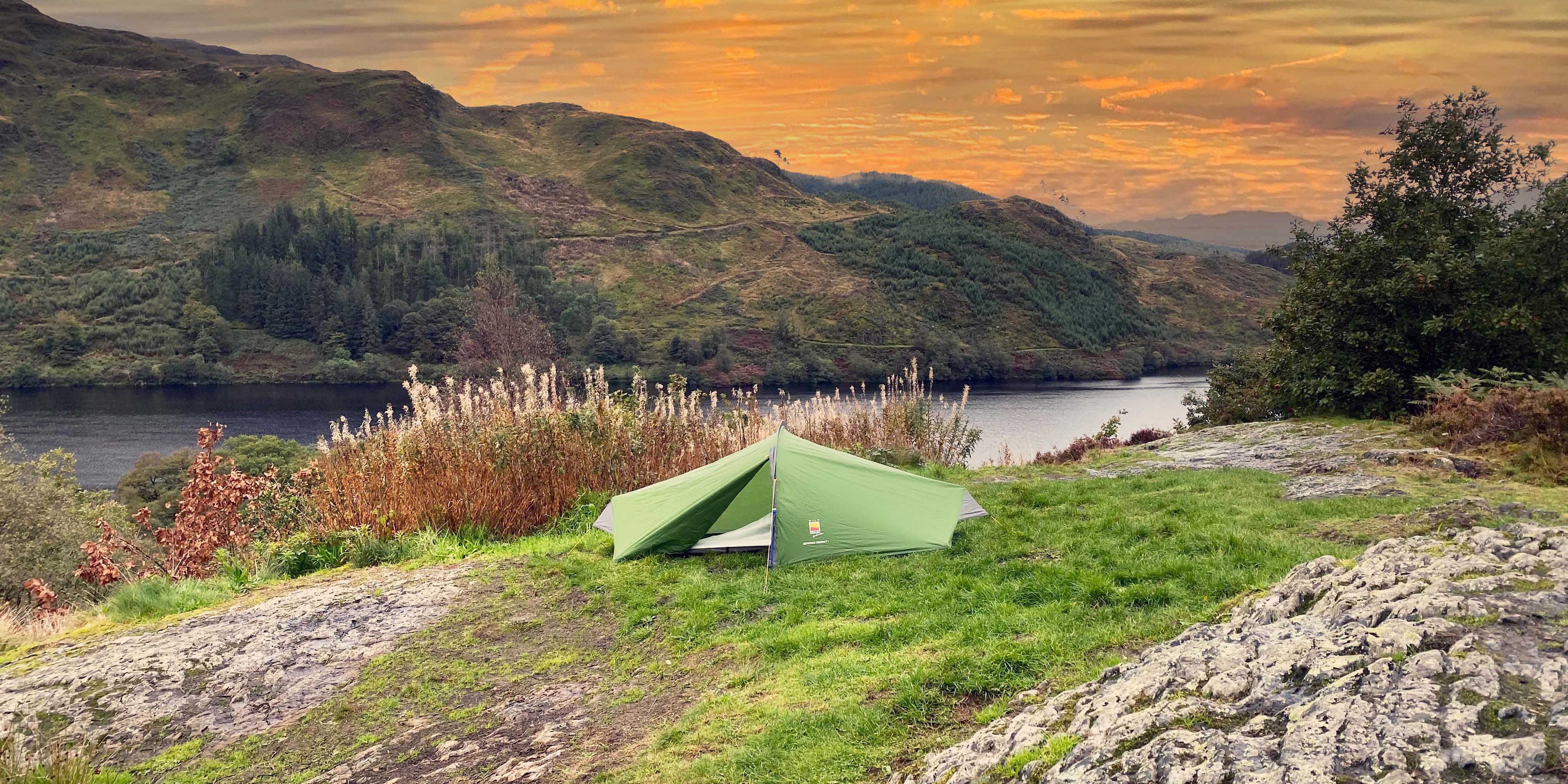
– Exposed locations

The double-edged sword of wild camping. On one side you get stunning views with great sunsets and sunrises but on the other side, you have no protection from the elements. The wind can pick up during the night which can rip out your tent pegs and destroy your tent, leaving you exposed on top of a mountain. There have been some instances where tents have been lifted into the air by the wind with people still in them. We always recommend finding spots that are safe and sheltered from the wind.

– Near roads or high-traffic areas

The farther away you are from roads and civilisation, the better. It will help ensure comfort and will reduce the chance of someone stumbling across your camp during the night. Staying well away from these areas will keep you out of bother.

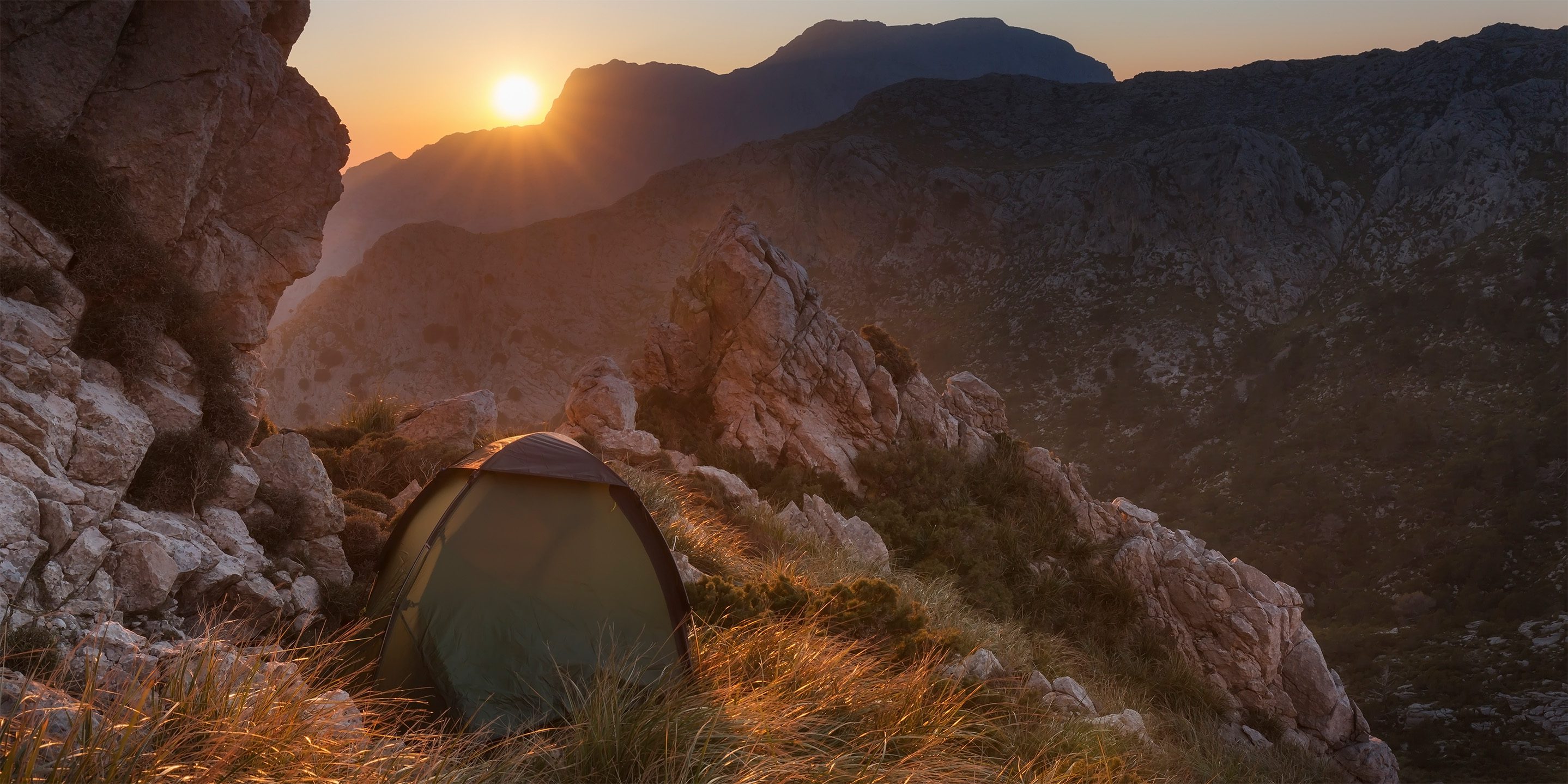
– Under cliffs

Camping under cliffs can potentially be deadly. Falling rocks can crush your tent in the middle of the night. Regardless of if you are in the tent at the time or not, falling rocks are never good for you and your tent.

– On sharp rocks or anything that can damage your tent.

Camping on sharp objects, like rocks, can damage the groundsheet on your tent and can cause it to leak over time. We recommend checking your pitch for sharp objects before setting up and only pitching your tent if there is nothing that could damage your groundsheet. You should also add a footprint to your set-up to avoid any unwanted holes in your tent.

– On fragile ecosystems

Camping on delicate ecosystems such as sand dunes, wetlands or nature reserves can lead to permanent damage to the environment. These areas are often slow to recover and can be easily damaged by the presence of humans. To avoid damaging the environment, it’s important to follow “leave no trace” principles and choose a more durable spot.

– Soft and uneven ground

Soft ground is great for comfort, but if it is too soft it can cause issues with your pegs. Your pegs can be pulled out by gusts of wind if the ground is too soft. We always recommend checking the round with a peg before pitching in a spot. Test the hold by putting the peg into the ground as you normally would, if it pulls out too easily, move to another spot.

Pitching up on uneven ground is uncomfortable and is generally a terrible idea. Even on a slight hill, you are going to slide on your sleeping mat and push up against the flysheet, which causes the condensation to saturate the inner tent. If you have ever camped on uneven ground, you will know how bad the back aches are in the morning.

After a long day of hiking, it is easy to choose the first spot that you find but think about changing weather conditions, ground conditions and wildlife. Most of the time a quick evaluation of your surroundings can save you from trouble later in the night.

Now you know the worst places to pitch a tent, read the best places to pitch a tent here.

Newsletter Updates

Enter your email address below and subscribe to our newsletter