
Plot-a-Pitch: locations, access and privacy
Plot-a-Pitch shows approximate locations submitted by our community. A pindoes not mean camping is permitted there. Terra Nova does not verify orendorse the legality of any location. Access and camping rules vary across theUK, and in most of it you need the landowner’s permission. Always check localrequirements before you pitch.
1. What Plot-a-Pitch is
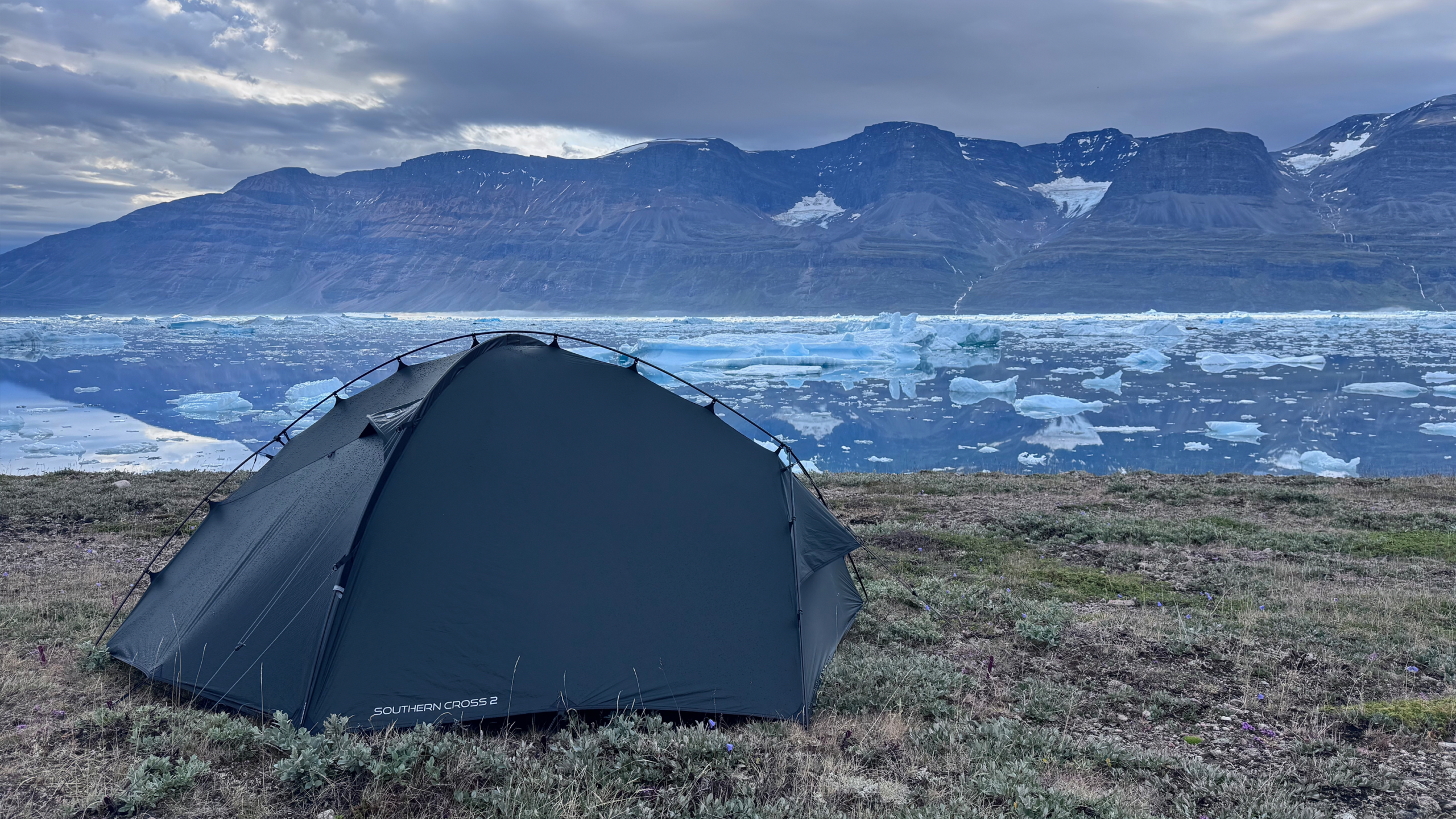
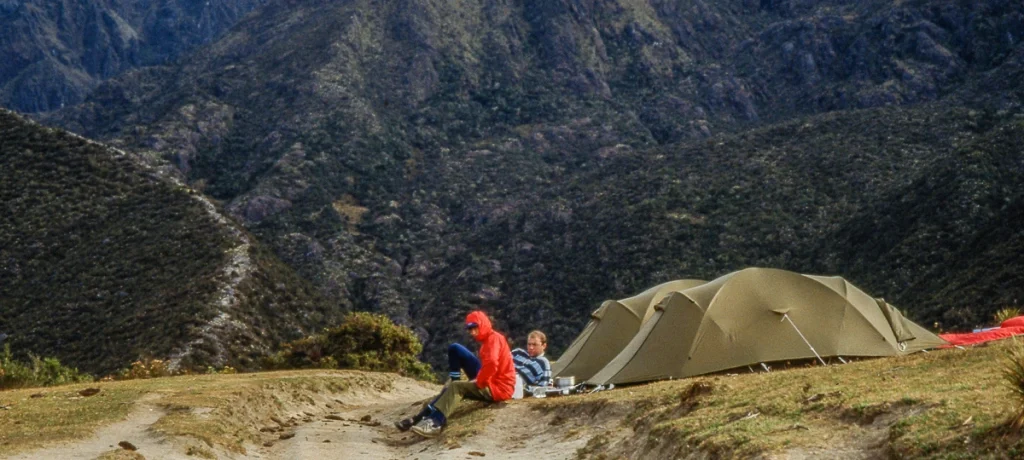
Plot-a-Pitch is a map of places people have taken their tents.
Every location on it was submitted by a member of the Terra Nova community. Locations are user-submitted and do not represent locations selected, inspected, recommended or approved by Terra Nova Equipment Ltd. We have not visited them; we do not know who owns them, and we have not checked whether camping is allowed there.
A pin does not indicate that camping is permitted at that location.
It is a record of where our tents have been. It is not a directory of places to camp, and it should not be used as one.
Submissions are reviewed before they appear on the map. That review is for content and suitability (see §6) — it is not a check that camping at the location is lawful, and it cannot be.
2. Camping and access rules vary across the UK
Laws governing access and camping differ significantly depending on where you are. A location shown on Plot-a-Pitch may be privately owned or subject to access restrictions, byelaws, seasonal closures, conservation rules, permit schemes or other requirements.
Very broadly, and without doing justice to the detail:
- Scotland has a statutory right of responsible access under the Land Reform
(Scotland) Act 2003, which includes wild camping when exercised responsibly and
in line with the Scottish Outdoor Access Code. Some areas operate local
byelaws or seasonal permit schemes. - England, Wales and Northern Ireland have no general right to camp.
Camping usually requires the landowner’s permission, and pitching without it
is normally a civil matter between you and them, though byelaws apply in some
places. - Dartmoor is the well-known exception in England, where backpack camping is
permitted in certain areas of the commons, subject to the National Park
Authority’s rules and its published maps. - Open access land is not a camping right. A right to roam on foot over
access land does not include a right to camp on it. GOV.UK draws that
distinction explicitly. - Protected sites — Sites of Special Scientific Interest, nature reserves,
scheduled monuments and similar, carry their own restrictions, and camping is
often prohibited outright.
These rules change, and local restrictions change more often than national ones. We link to the authoritative sources in §9 rather than reproduce them here, because a summary on this page would be out of date before you read it.
3. You are responsible for checking access and permission
You are responsible for making sure you have the right to camp wherever you pitch your tent.
Before camping, check current access rights, landowner permission, local bylaws, seasonal restrictions and any conservation or environmental requirements that apply. Where permission is required, get it.
Nothing on Plot-a-Pitch is permission, advice, or a substitute for either.
4. Leave no trace, and look after the places you visit
Wherever you pitch:
- Arrive late, leave early, and keep groups small.
- Take everything away with you, including all litter and food waste.
- Deal with human waste properly and well away from water and paths.
- Do not light fires where they are prohibited, and never on peat.
- Do not disturb wildlife, livestock, nesting birds or working land.
- Do not damage vegetation, walls, gates or watercourses.
- Leave no sign that you were there.
If the place would not be as good for the next person, it was not a responsible pitch.
5. Locations on the map are approximate
Pins are published deliberately imprecise. We reduce the precision of every submitted location before it is stored, so what you see is an approximate area rather than the point someone pitched on.
In practice a location is snapped to a grid of roughly 500 m before it is stored, so a pin describes an area of about that size, not a spot within it.
That is a privacy measure, and it has a consequence worth stating plainly: a pin is not accurate enough to navigate to, and the ground it appears to sit on may not be the ground it came from. The map’s zoom is capped for the same reason.
If you submit a pin, please only submit locations you are comfortable sharing publicly in approximate form. Do not submit private addresses, sensitive wildlife locations, or anywhere that publishing the information could cause harm.
Photographs submitted with a pin may be shown on the map and used by Terra Nova Equipment Ltd. promotionally, including on our website and social channels. Only upload photographs that are yours to share.
6. Locations we may remove
Some places are perfectly lawful to camp in and still a poor thing to publish, because a map can turn somewhere quiet into a destination.
We may therefore remove, suppress or decline to publish a location, as a matter of our own moderation policy, and without making any judgement about whether camping there is lawful, where it involves, among other things:
- Requested by the landowner or land manager
- Sensitive habitat or fragile ground
- Nesting site or wildlife location
- Archaeological or heritage site
- Dangerous location
- Subject to a temporary or seasonal restriction
- Private residential location
- Publication could reasonably cause environmental harm
- Another reason we judge publication unwise
- sensitive habitats and fragile ground
- nesting sites and wildlife locations
- archaeological and heritage sites
- dangerous locations
- locations subject to temporary or seasonal restrictions
- private residential locations
- anywhere publication could reasonably cause environmental harm
Because published locations are approximate (§5), removals usually apply to an area rather than a single pin, and may also prevent new pins from being published in that area.
7. Asking us to remove a location
If you own or manage the land. If a Plot-a-Pitch location is on land you own or manage and you believe it should not be shown, please tell us. Use the form below, or contact us at help@terra-nova.co.uk. Include the location and the reason for your request. We will review it promptly and may remove or restrict the location where appropriate. You do not need to give a legal reason, and we would rather hear from you than not.
If you submitted the pin, you can ask us to take your own pin down. Because we deliberately store nothing that identifies who submitted a pin (§8), we may need your help to find it, the approximate area, roughly when you submitted it, and the photograph or caption if there was one.
If a photograph shows you, contact us with enough detail to identify the photograph, and we will review it.
Public copies of pages, search engine caches, for example, can take longer to update than our own map.
8. How locations and photographs are protected
Plot-a-Pitch was designed to publish as little as it can, on purpose.
What we do
- Locations are reduced in precision before they are stored. The exact point
a person taps is not written to our database. Each location is snapped to a
coarse grid and then displaced by a random amount, and that displacement is
discarded.
Between the two, a published location can sit anywhere up to about 450 m from the point that was submitted, and because the displacement is not recorded, the original point cannot be recovered afterwards : not by us, and not by anyone who asks us for it.
- Photographs are stripped of embedded metadata, including GPS
coordinates, capture times and device information before they are stored. - Pins carry no contact details. We do not ask for an email address to
submit one, and we do not store an IP address or browser details against it. - Photographs are not linked to a customer account, even when the person
submitting is signed in. - A display name and caption are optional, and shown publicly only because
the person chose to add them.
What that does and does not mean:
- These measures are designed to reduce the risk of identifying an individual or the precise location of a campsite. They do not guarantee that a location can never be worked out from other information, including the photograph itself or the circumstances around it. We describe them as measures, and we do not describe pins as anonymous.
- One difference worth knowing. A location can reach the map two ways. If you add one through the map page, the imprecise location is the only one that exists — there is no exact original held behind it. If you add one as part of a product review, the review itself is an ordinary product review and carries the details you gave with it, such as your name and email address, in the same way any review does.
- Other systems still see ordinary web data. Our web servers and our content delivery network record requests in their logs, and the map is rendered using Google Maps, so Google receives visitors’ technical data in the usual way for an embedded map. Those are separate from Plot-a-Pitch and covered by our main privacy policy
- How long we keep things. Published pins and their photographs are kept while they remain on the map. Reports sent to us under §7 are kept for 18-months after we have dealt with them, so that we have a record of what we were asked and what we did, and are then deleted.
You can ask us about the information we hold, or ask us to delete it, using the contact details in our main privacy policy.
9. Where to check access rules
- Scotland: Scottish Outdoor Access Code
- England: GOV.UK access and rights of way, and the Countryside Code
- Wales: Natural Resources Wales, and the relevant National Park authority
- Northern Ireland: countryside access guidance
- Dartmoor: Dartmoor National Park Authority camping map and rules
- National Parks and protected sites: the relevant authority for the area
you are visiting.
Where these conflict with anything on this page, follow them.