
South Georgia (Sub-Antarctic) Expedition
In the summer of 1989, five of us sailed south with HMS Endurance for South Georgia, four months on an island most people only ever see from a boat. The plan was to climb Mt Carse, the unclimbed high point of the Salvesen Range, and as many of its neighbours as we could get.
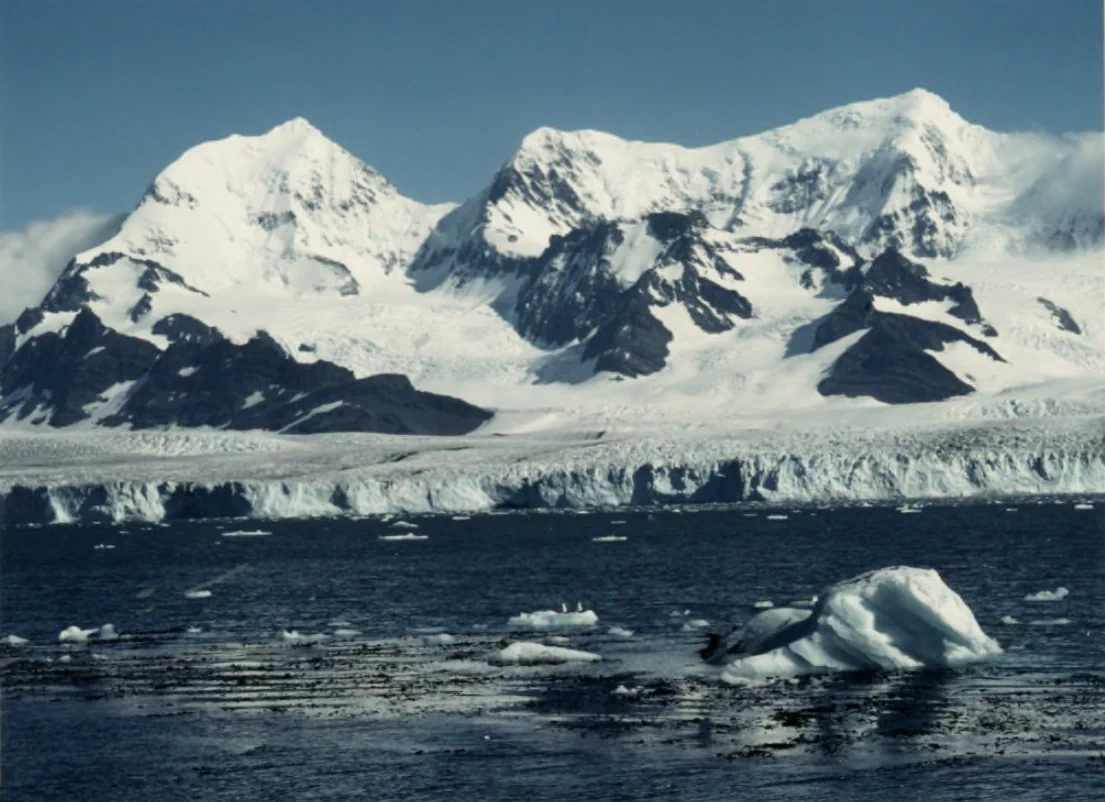
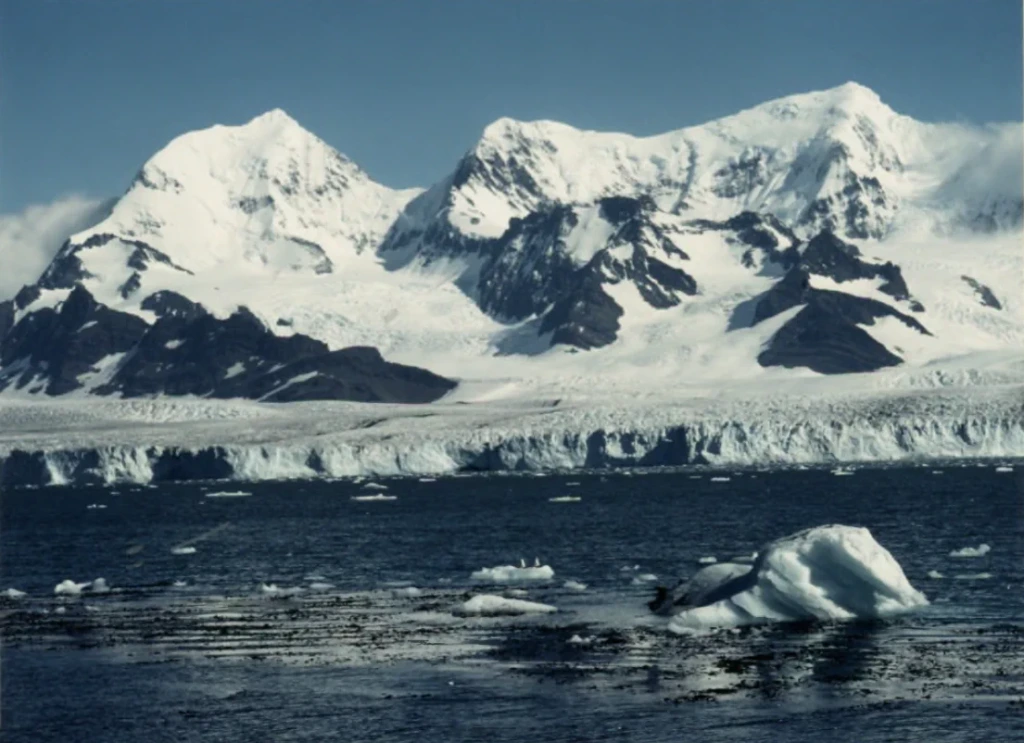
South Georgia is 900 miles east-south-east of the Falklands, no further south of the equator than Scotland is north, but colder, because it sits inside the Antarctic Convergence. The island is a hundred miles of mountains rising straight out of the sea, glaciers to the water, permanent snow above 2,000 feet, and a weather system that funnels the entire Southern Ocean through the passes.
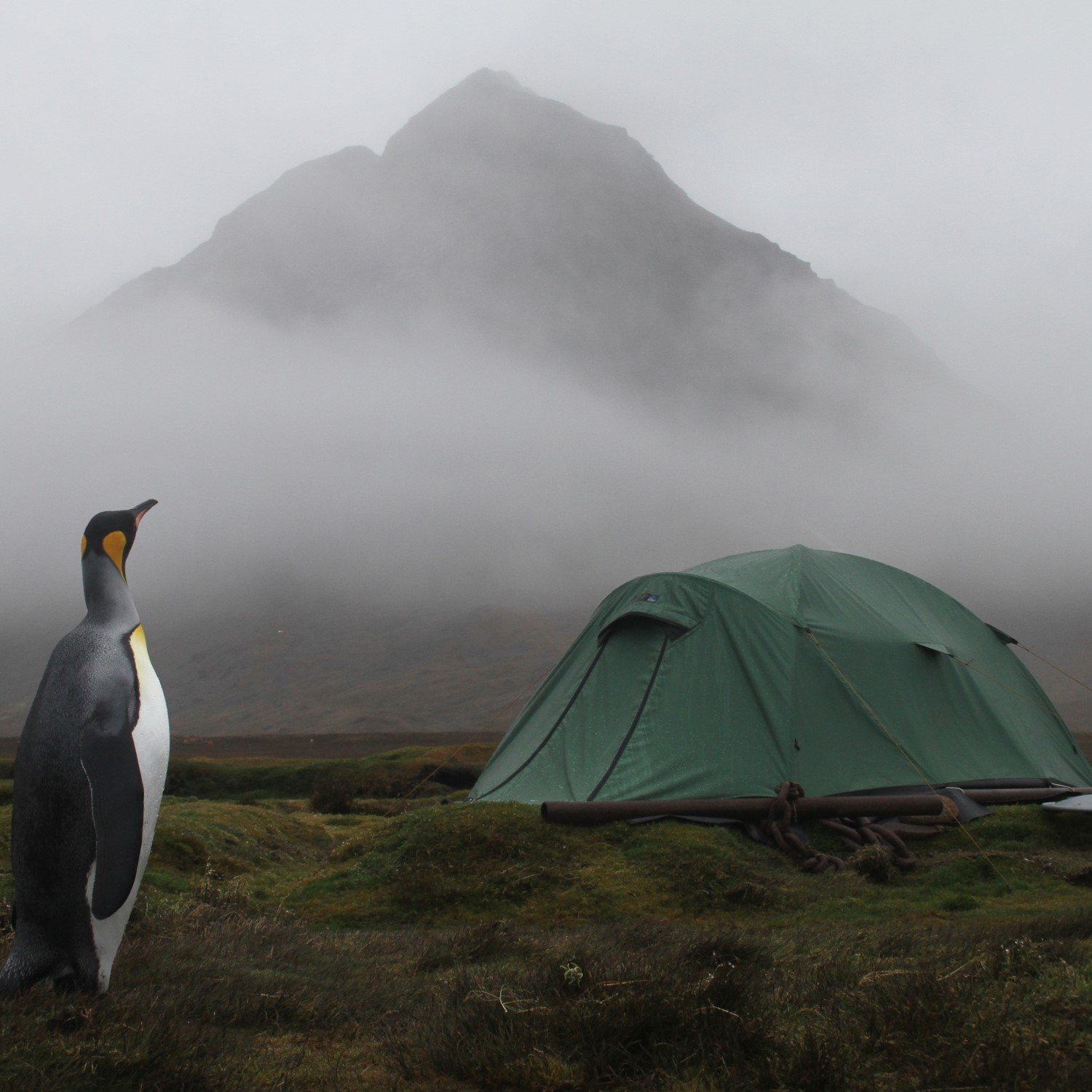
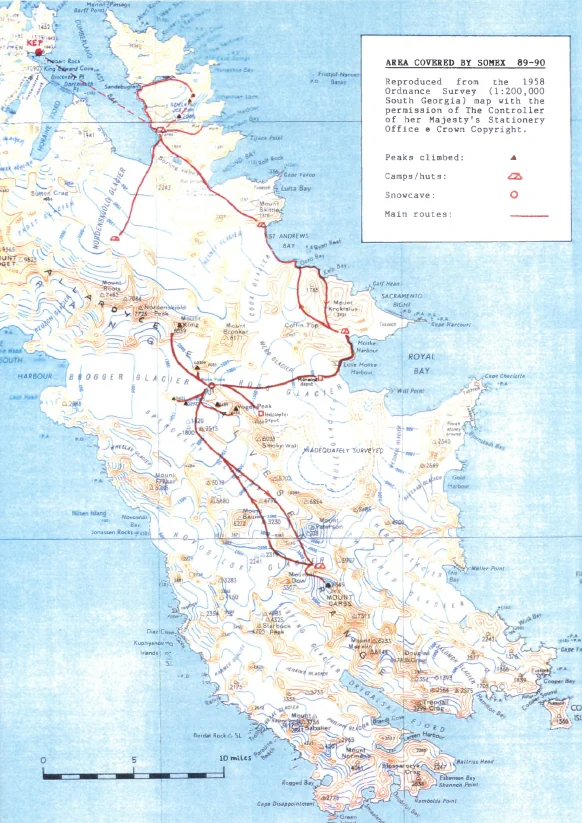
We flew from Brize Norton in early December and embarked on HMS Endurance for the three-day passage. On the day we landed, the flight commander agreed to fly one of the ship’s helicopters twenty-five miles south-east to Royal Bay to cache half our supplies, packed in Bowater waterproof barrels. Without that lift, we would have spent the season carrying loads. The rest went with us in the ship’s boat across Cumberland East Bay to the hut at Sörling Valley, and from there we walked. Two days south-east to Moltke Harbour, at the corner of Royal Bay, with a British Antarctic Survey hut leaking on the world’s largest king penguin colony for company at St Andrews.
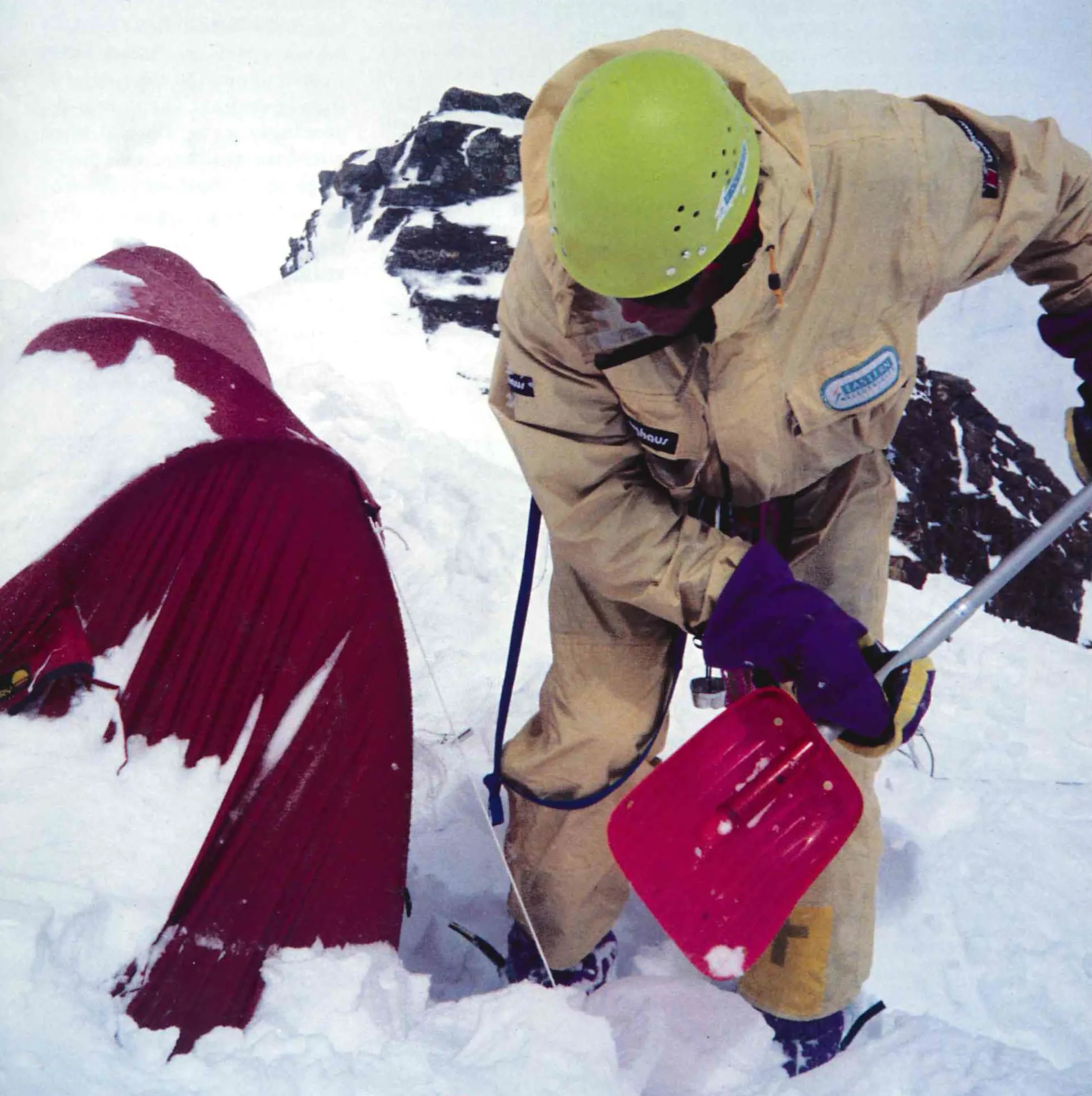
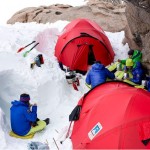
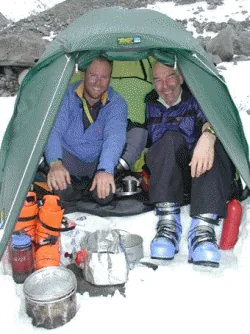
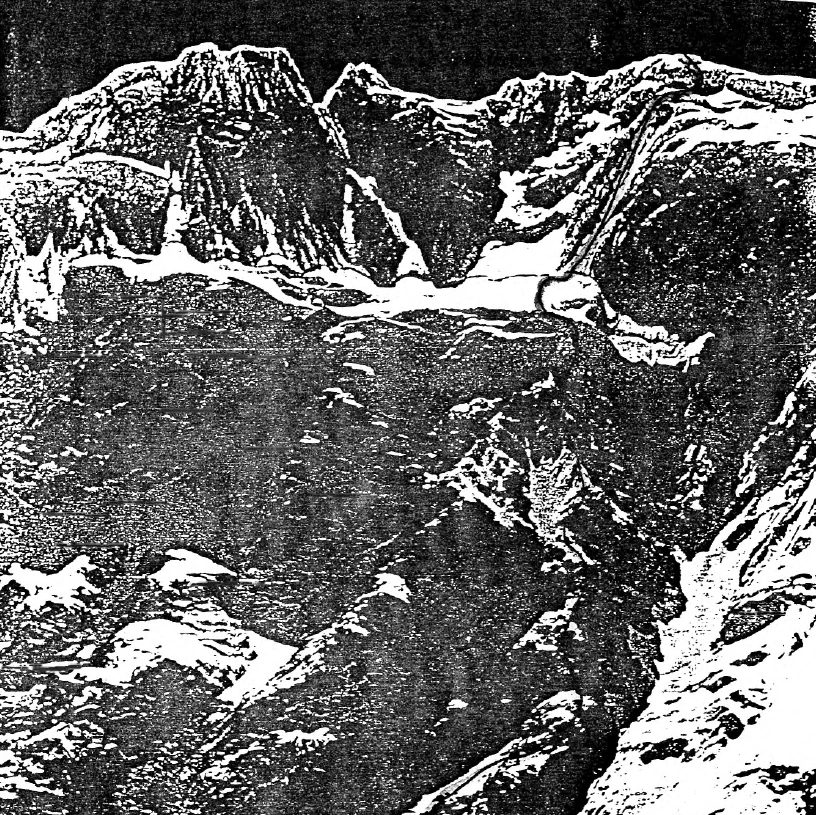
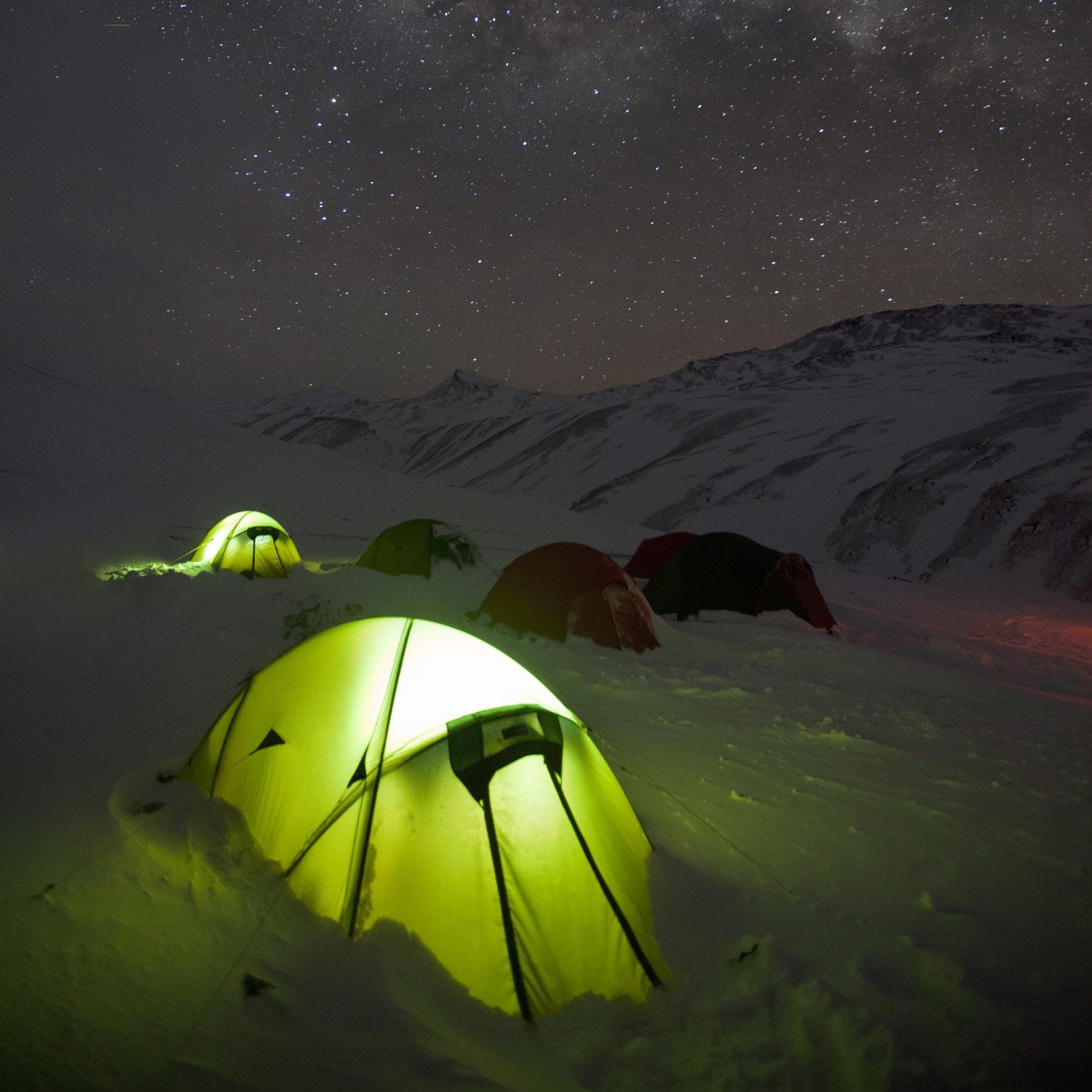
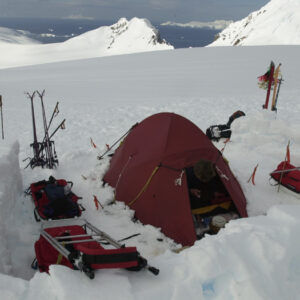
Our whole strategy for the Salvesen Range depended on a reliable base at the Ross Pass, and tents were never going to be enough. On New Year’s Eve, Davison and Venables started digging. Over the next four days, with a steel spade and a snow saw, we enlarged the cave until we had two chambers seven feet high, room to pitch the two-man tent and the remains of the three-man tent inside, and space besides for a kitchen dresser, further storage cupboards, ornamental Romanesque columns and a late Gothic niche. Life in the cave was, we told ourselves, a little monotonous, but we had good stocks of food and gas, a large book of crosswords, and an eclectic range of books from W H Smith.
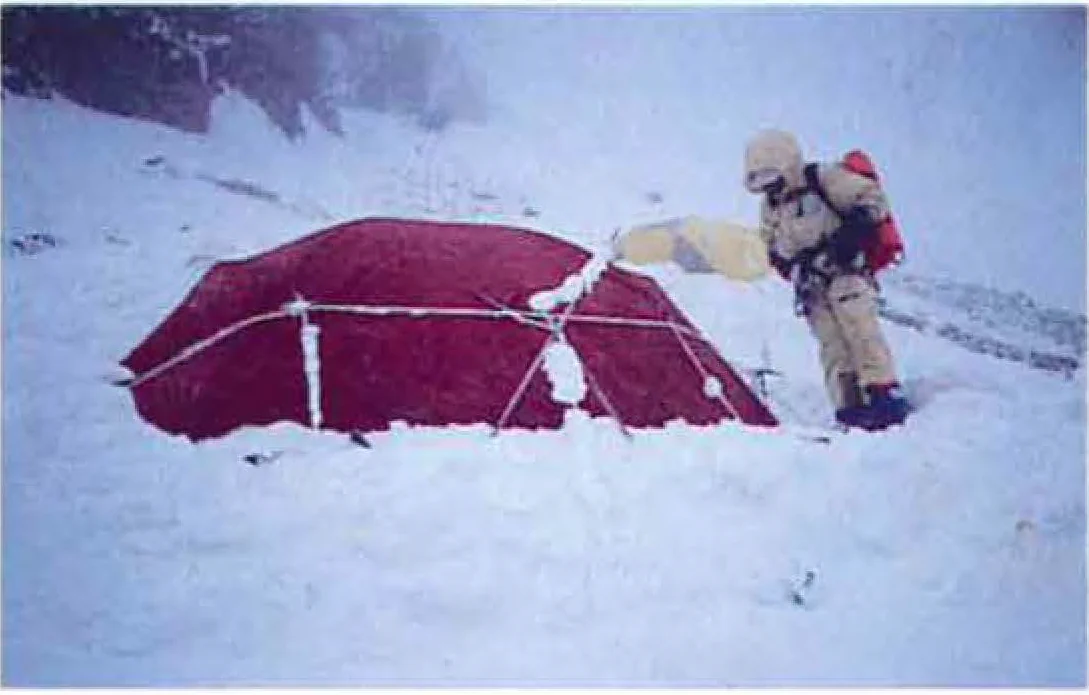
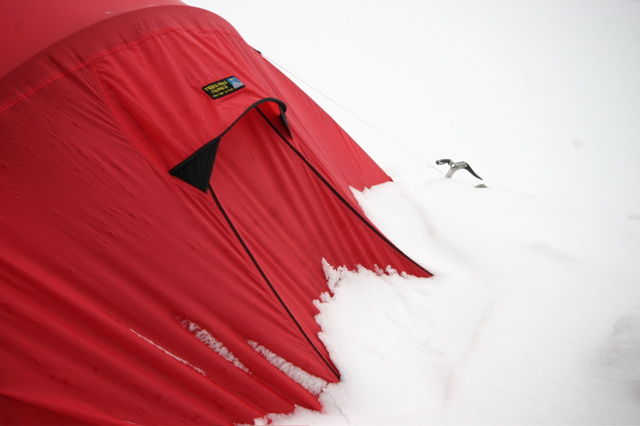
The weather did the rest. On Boxing Day, the wind recording instruments at King Edward Point went off the scale, with the weather officer estimating gusts of 140 knots. Down at the pass, a wind scoop we had cut for our first cave filled with a rising lake overnight and forced Davison and Griffin out at dawn on the 27th, with the water lapping at the door. Some experts have questioned the 140-knot figure, but it can be said with certainty that visitors to South Georgia should expect unusually violent winds with frequent gusts of over 100 knots.
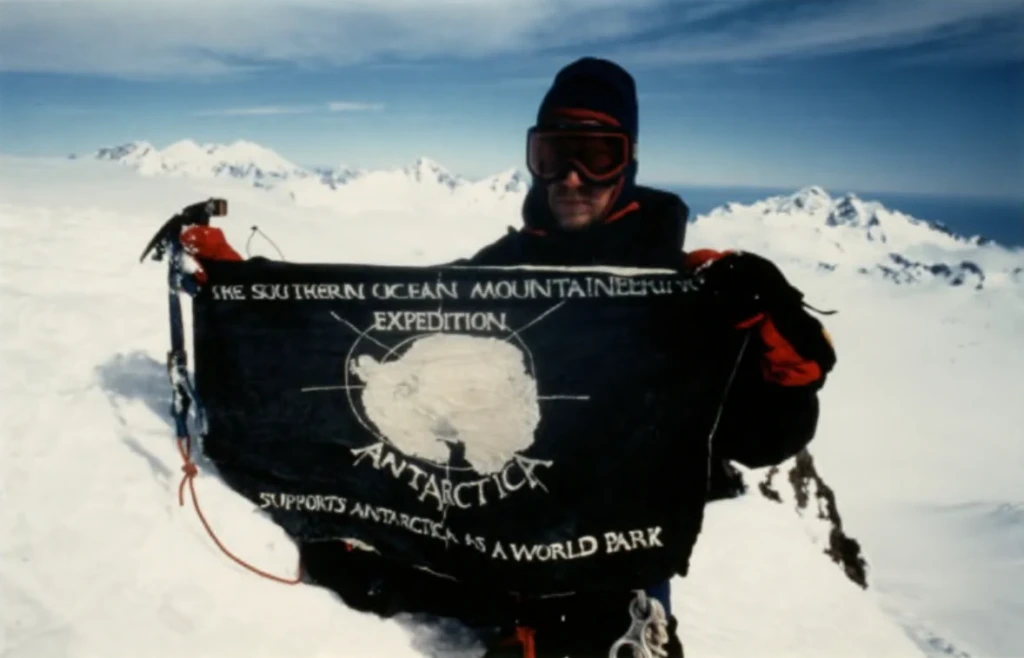
On 16 January, the weather held long enough for the first real climb. All five of us left the cave at 2.30 am and reached the foot of Vogel Peak at four. The four climbers started up the south-west flank at five, with ‘t Hooft filming from the base. Perfect névé underfoot, forty-five-degree slopes, terraces, and steeper ice walls between crevasses. We reached the summit at 7.45 am in deteriorating weather and flew the expedition flag stating our support for Antarctica as a World Park.
By 21 January, our allotted time was almost up, and we were down to two days’ food. If the weather were not fine, we would have to walk out to Royal Bay with Mt Carse still unclimbed. We were lucky: dawn was fine, with the wind in the east. The original plan had been to establish a forward base near Carse, but bad weather had stopped us. The only option now was to split the team, travel fast and light, and go for the peak in a quick dash.
Davison and Venables set off at seven for Carse. Half an hour later, Freeman-Attwood, Griffin and ‘t Hooft went the other way, for Mt Kling, one of the great unclimbed peaks of the Allardyce Range. ‘t Hooft remained at the base to film with a long lens; the other two climbed a wide couloir on the south flank, took a pitch of Scottish 3/4, gained the south-west ridge and set about the final 1,500 feet. Hard blue ice at sixty-five degrees, a top pitch of Scottish 4 on rotten rock, a rotten crumbling blade of ice perched twenty-five feet above the summit rock which was too dangerous to attempt, and, at 3.30 pm, the summit. They abseiled off a snow stake and, in low cloud, navigated by compass back to the snow cave.
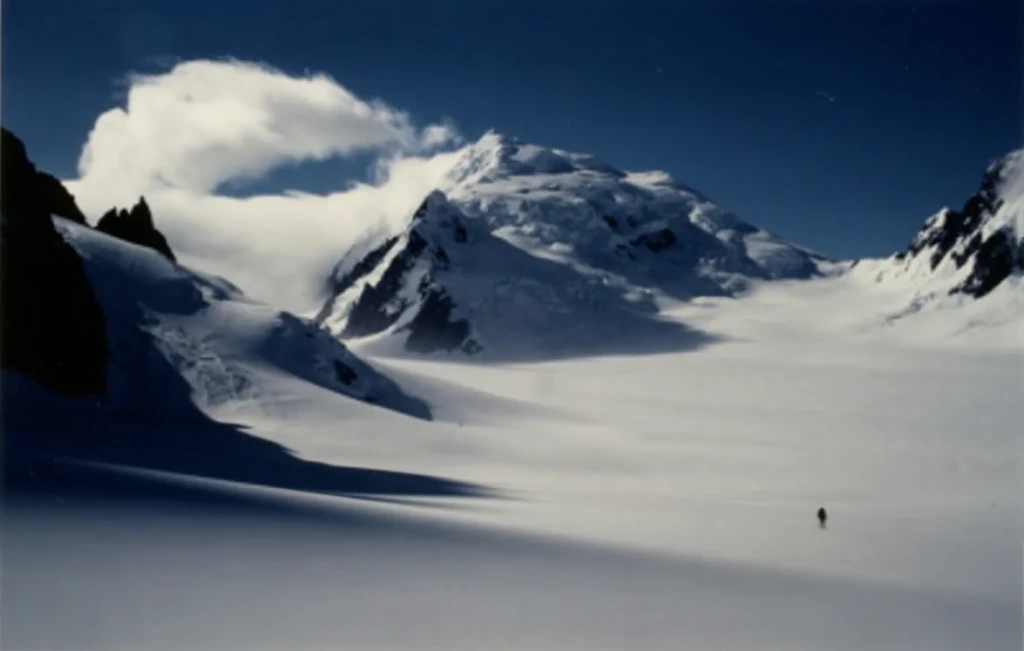
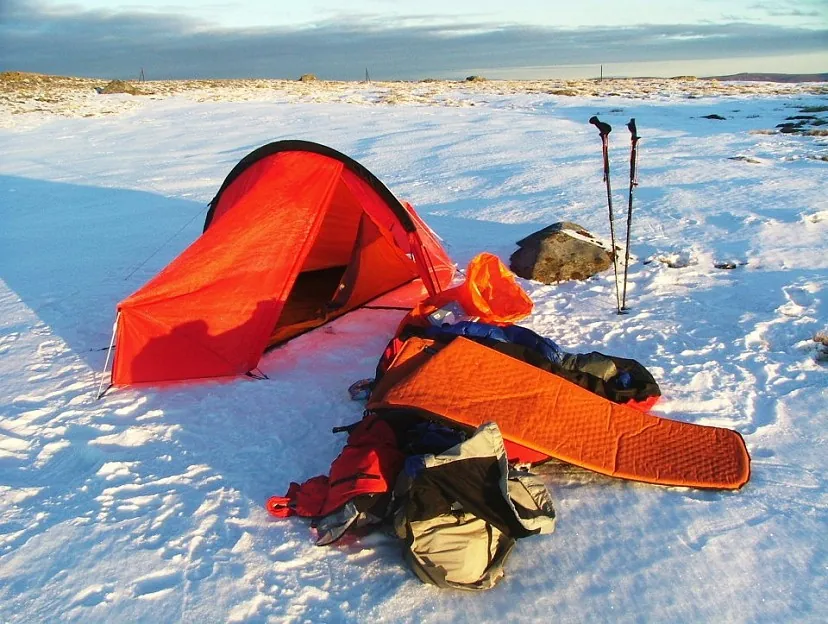
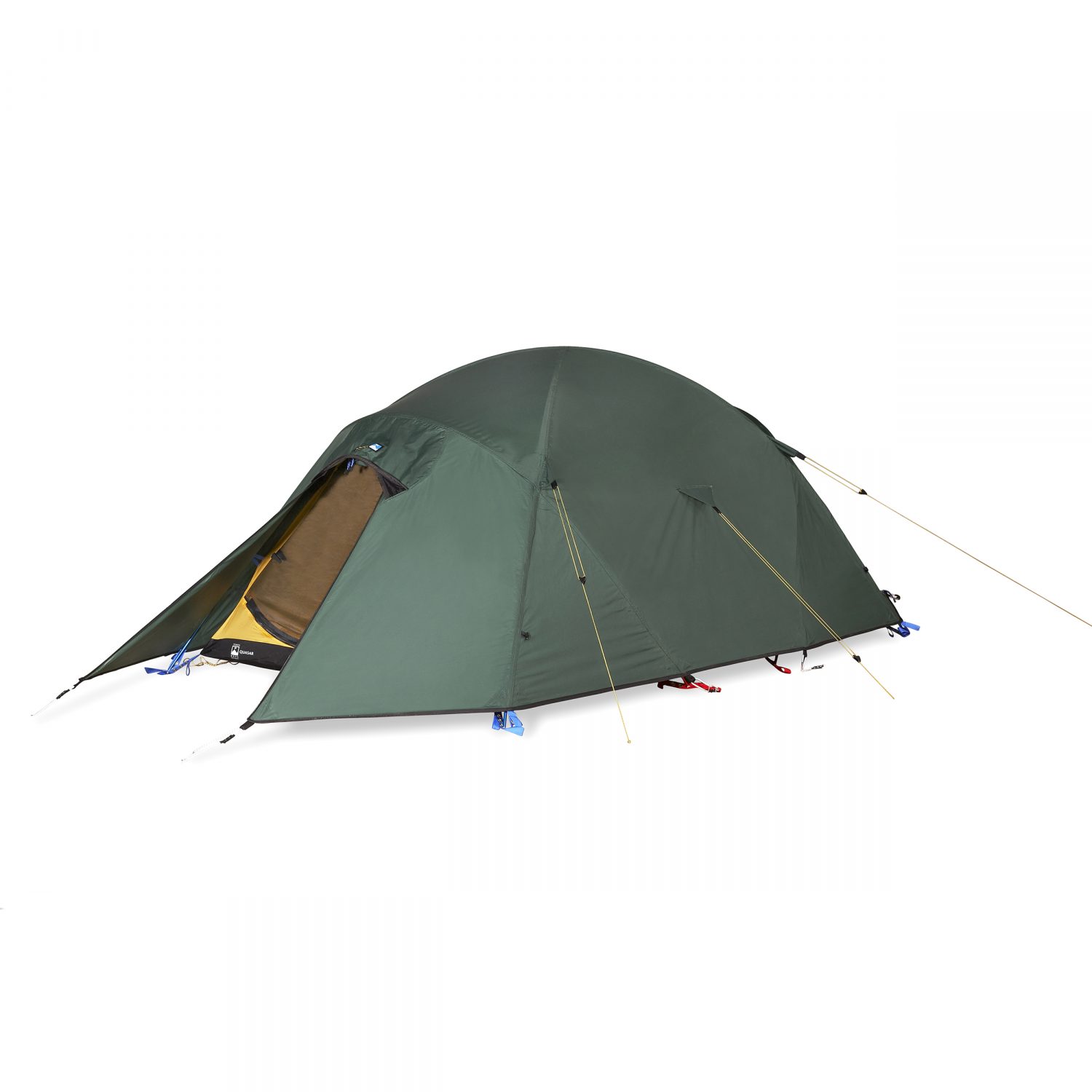
Davison and Venables, meanwhile, were skiing south-east up the Spenceley Glacier, across a pass east of Pt 4792, down into the basin below Mt Paterson, then up to another pass with a clear view of Mt Carse and what was obviously the most feasible route up its north-west flank. A final ski across the Novosilski Glacier took them to a sheltered wind scoop at 3,500 feet, right at the foot of the mountain, where they pitched the two-man Quasar at 2.30 pm.
After a meal and a rest, they set off at five for the 4,000-foot climb. The route was not technically hard, but there were some steep, exposed ice slopes, and the height gain felt tiring after a thirteen-mile ski in. Cloud banked against the eastern side of the mountains for the length of the Salvesen and Allardyce ranges, but to the west the sky remained clear, the setting sun reflected in the Southern Ocean, deep blue shadows lengthening on the Novosilski Glacier. The final 2,000 feet weaved up through the great mushrooms of hoar frost that festoon South Georgia ridges above 4,000 feet, glowing a deeper purple as they approached the top. The sun had already set when they finally stood on the summit at 9.45 pm.
The wind on top was bitter, and after five minutes, they started down in the dark. Two hours later, they were back in the Quasar, just staying awake long enough to drink a mug of soup. The next morning, they packed up and started back for the snow cave. The weather held for the trundle down the Spenceley Glacier, but coming round below Vogel, they were hit by cloud and vicious katabatic winds. Climbing to the final pass, they were knocked out of their ski bindings and swapped skis for crampons. Venables, at one point, could not make forward progress and resorted to crawling on hands and knees, at which Davison came to the rescue and dragged him over the pass by the scruff of the neck. The final mile back to the marker wands was done in the traditional white-out. They reached the cave at 2.30 pm on the 22nd. The 30-mile round trip to the summit of Carse had taken 31 hours.
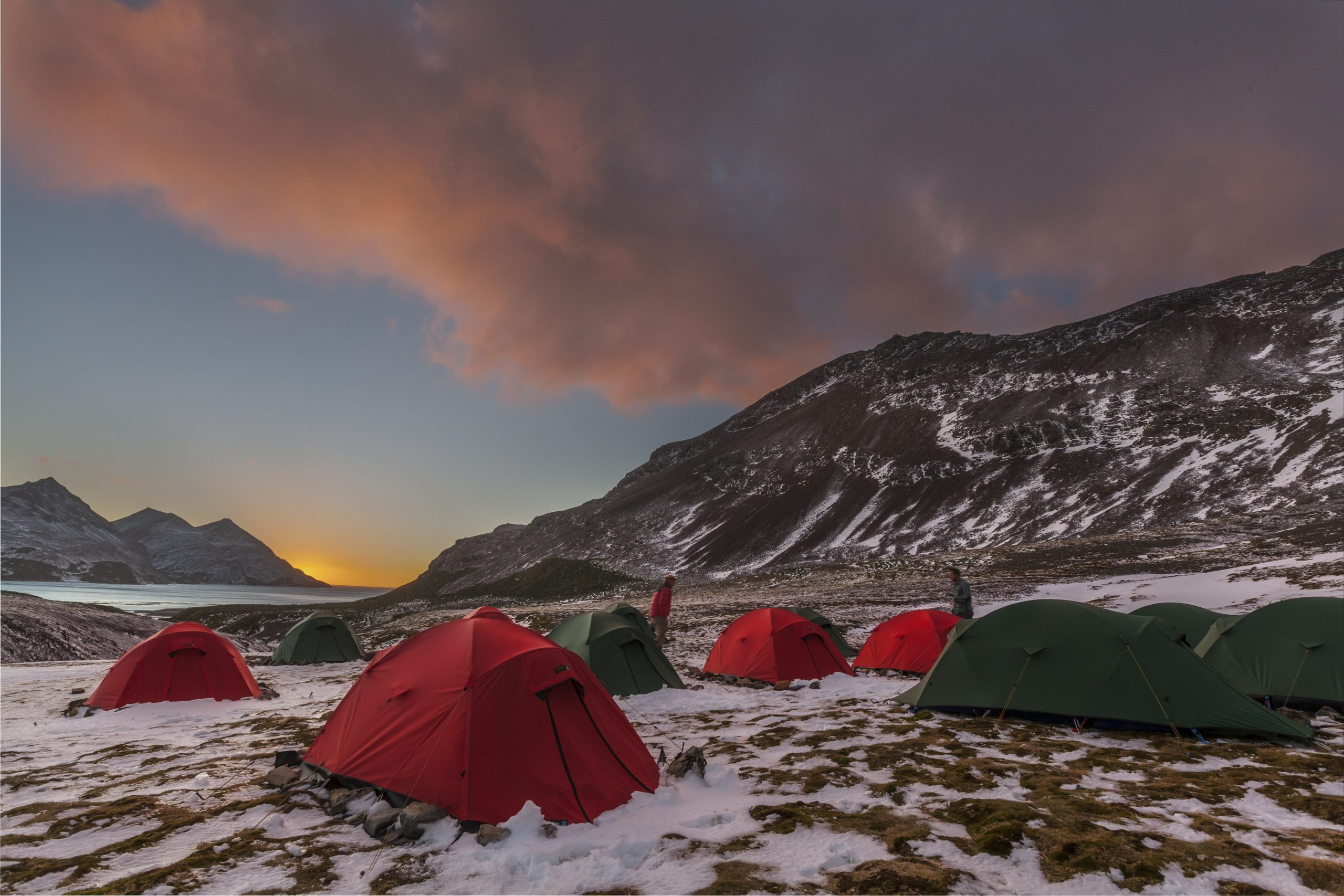
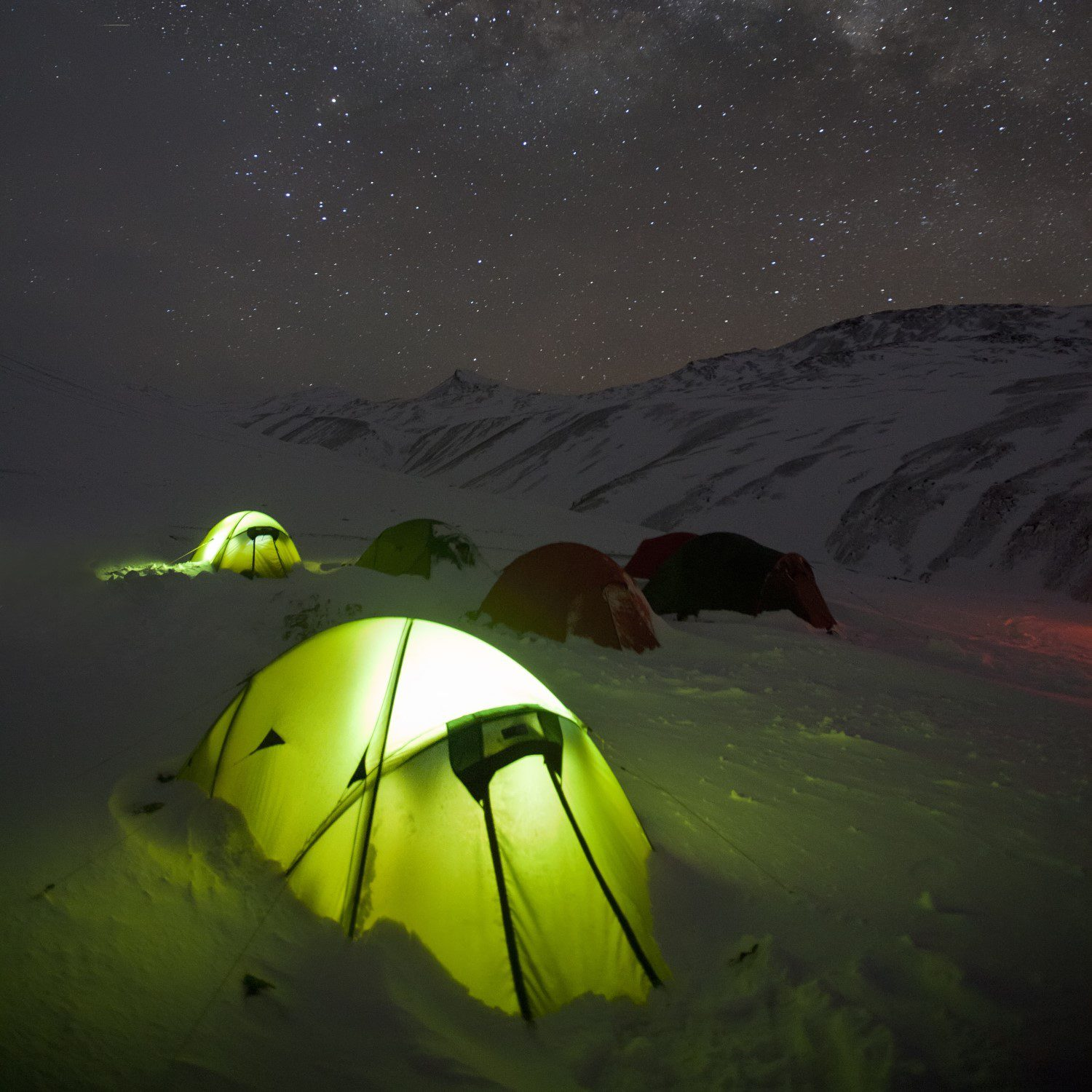
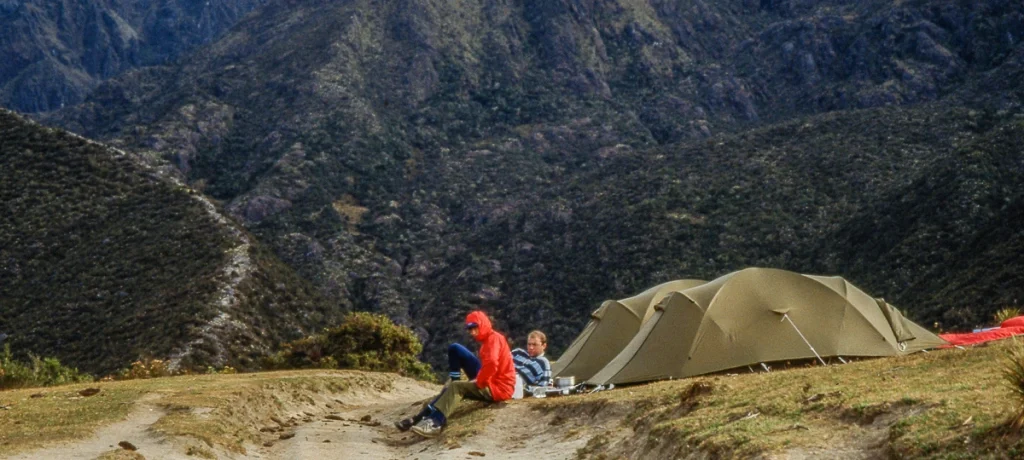
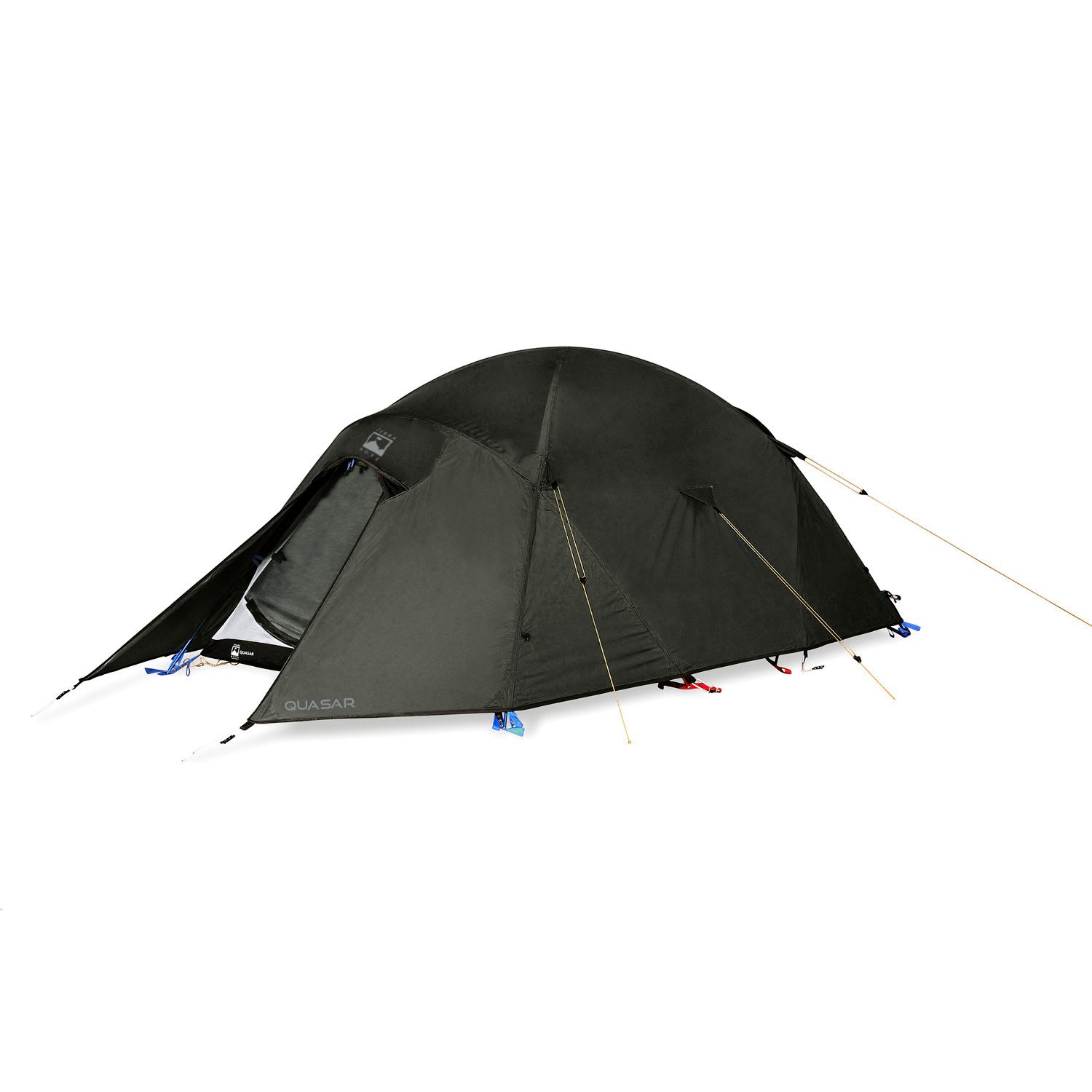
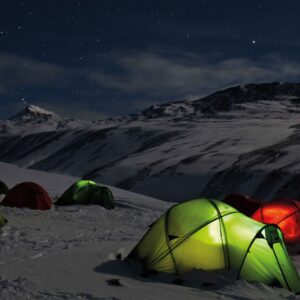
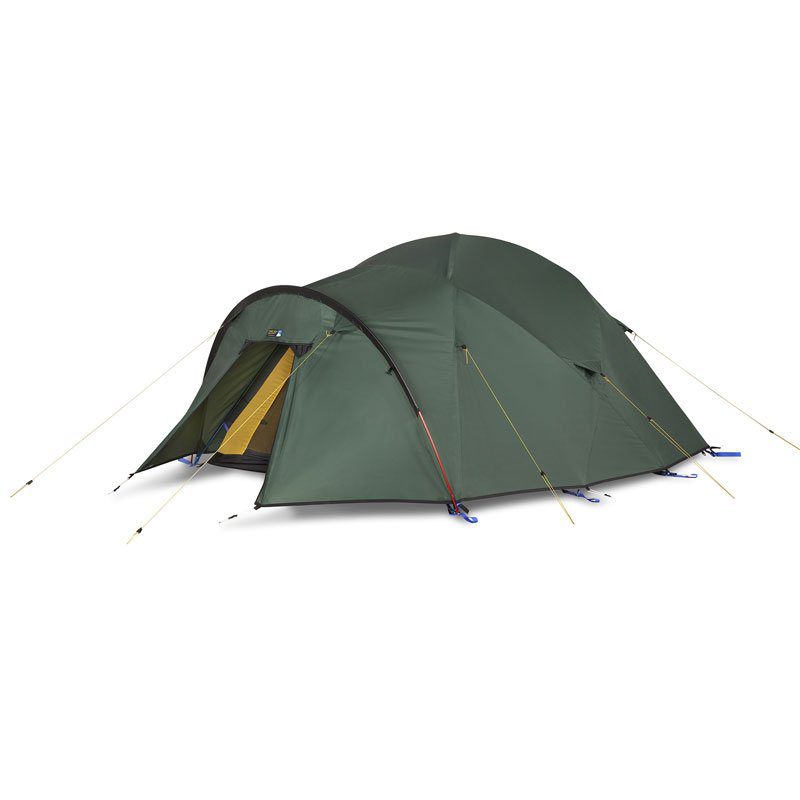
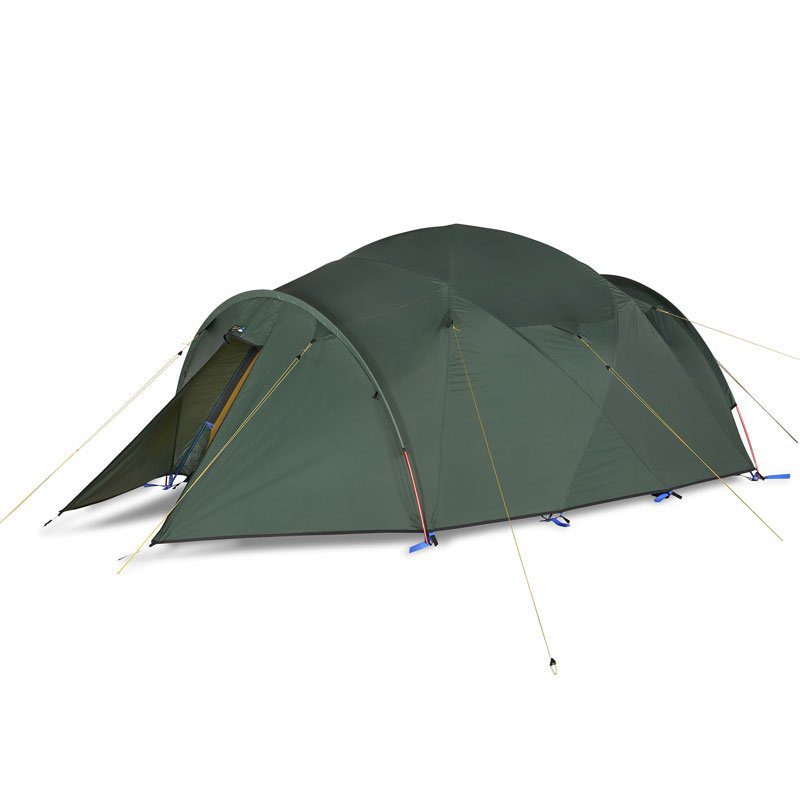
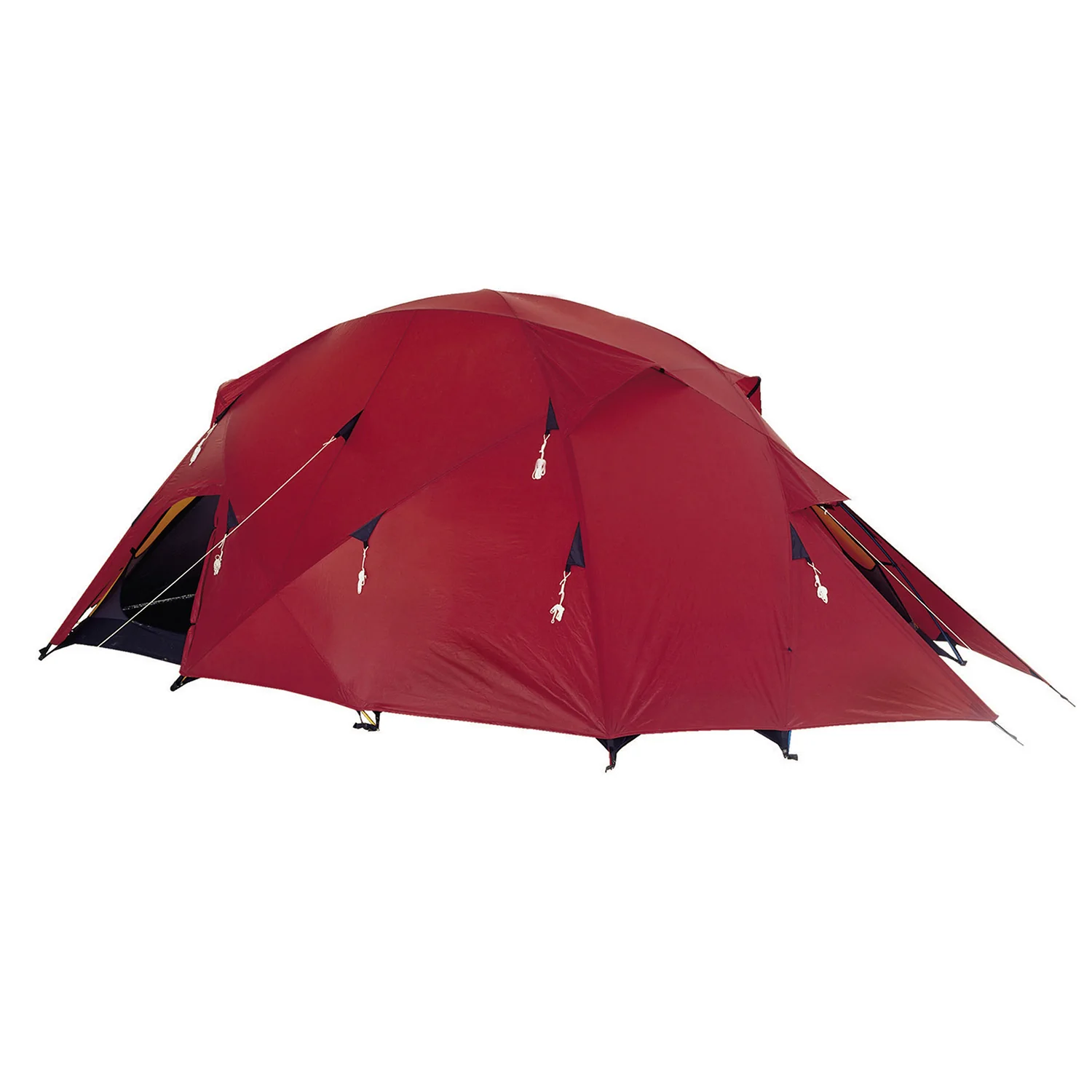
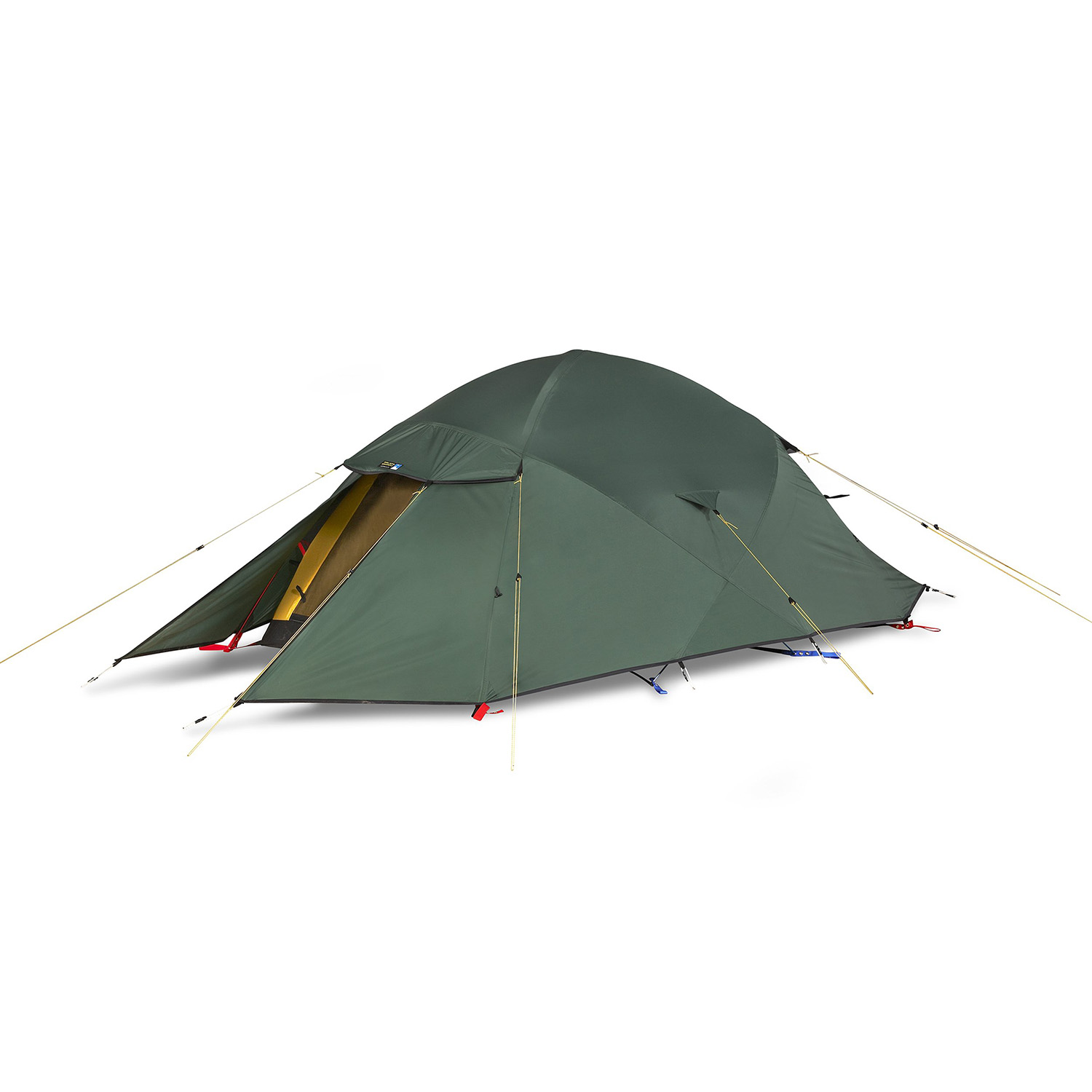
The tents did their share of the work. The Super Nova took the storm loads at Royal Bay and Sörling Valley. The Quasar was the tent Davison and Venables carried on the quick dash, the reason they could stop and sleep at the foot of Carse rather than turn back. The expedition report put it plainly:
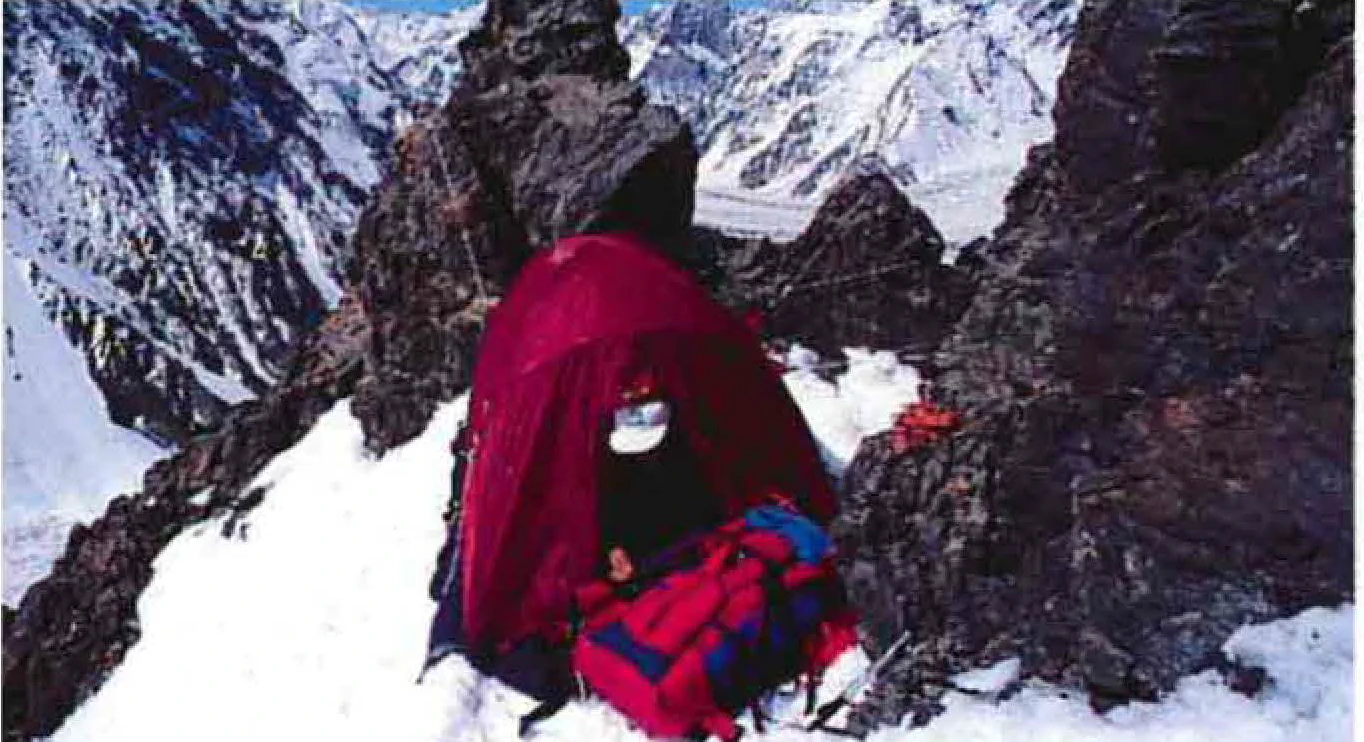
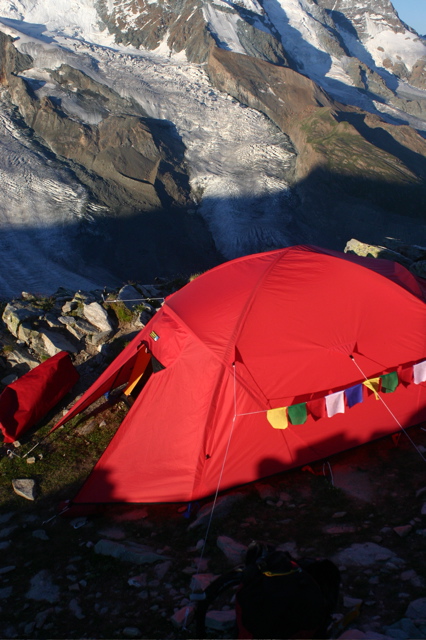
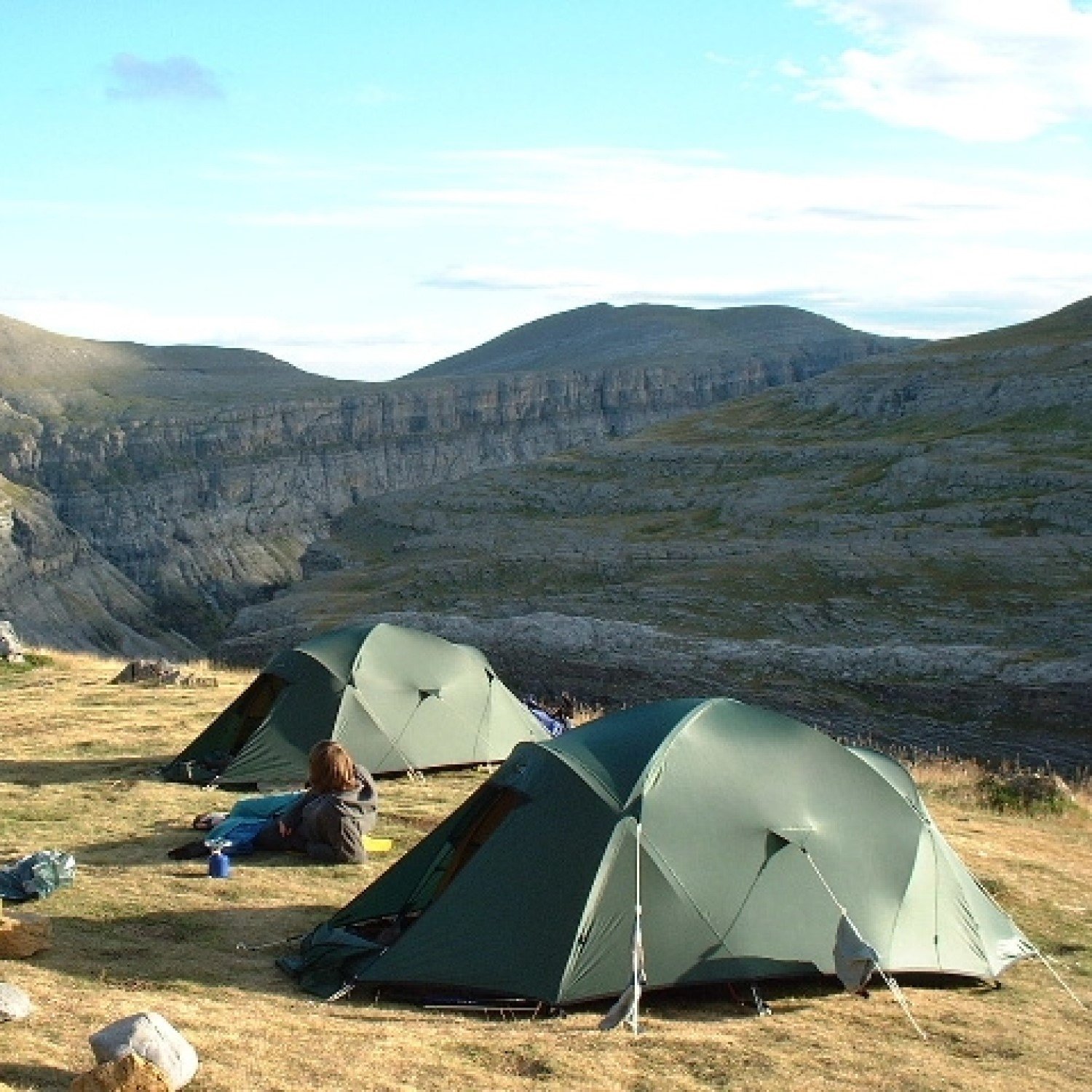
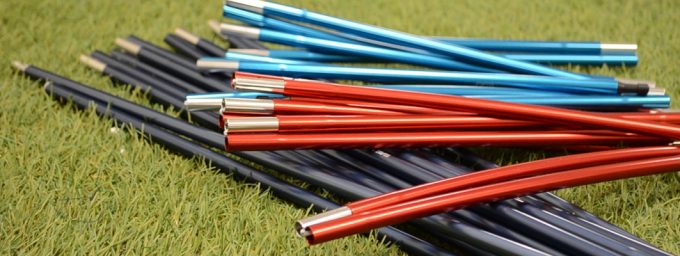
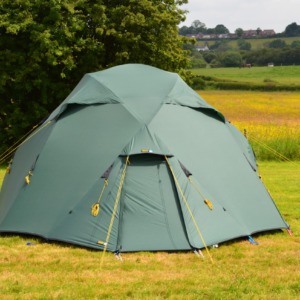
At Royal Bay and Sörling Valley, we supplemented the existing huts with two Wild Country tents, a Mountain Super Nova and Mountain Quasar. The former is a more spacious dome, can sleep three in reasonable comfort and on one occasion accommodated all five of us. The Quasar is smaller and less luxurious, but because of its low profile even stronger in the wind. It hardly moved in 100 mph gusts, whereas the Super Nova did flex a little. Both are superbly designed and have the features essential for a serious mountain tent: strong poles, properly proofed flysheet, ample porch entrances at both ends, sufficiently robust groundsheet and multiple guylines.
Wild Country’s kit was on us as well as around us. Their Goretex pile-lined mittens had proved themselves for us in the Himalaya, though on South Georgia, in the wet, we came round to the view that traditional woollen Dachstein mits were probably the better tool for the job.
Another dome tent, of a different make, was not so well received. It survived four days at Royal Bay before imploding. One member of the team summarised the night: “We would have been marginally better off without it.”
On 1 March, we sailed north in RFA Diligence. Falklands on the 4th. Britain on the 10th. Kees ‘t Hooft, three days after we landed, was already at John Gau Productions cutting the film.
EXPEDITION OUTCOMES
The Southern Ocean Mountaineering Expedition made the first ascents of Vogel Peak (4,436 ft), Mt Kling (6,059 ft) and Mt Carse (7,649 ft), the highest peak in the Salvesen Range, along with several smaller nunataks. The expedition supported the campaign for Antarctica to be declared a World Park, and its film was cut for Channel Four.
Stephen Venables, with Julian Freeman-Attwood, Brian Davison, Lindsay Griffin and Cornelius ‘t Hooft. Southern Ocean Mountaineering Expedition to South Georgia, 1989-90. Approved and supported by the Scientific Exploration Society; Honorary Director Colonel J N Blashford-Snell MBE.
-
SALE FEATURED


Limited Edition Quasar Tent & Bundle
-
FEATURED
Murlan Elite 2 Tent
-
Expedition Quasar Tent
£1,100.00 Add to Pack This product has multiple variants. The options may be chosen on the product page -
Quasar Tent
-
Expedition Hyperspace Tent
£1,450.00 Add to Pack This product has multiple variants. The options may be chosen on the product page -
Expedition Terra Firma Tent
£1,800.00 Add to Pack This product has multiple variants. The options may be chosen on the product page -
Outlet – Expedition Terra Firma Tent – Grade A
-
Expedition Cosmos Tent
£5,600.00 Add to Pack This product has multiple variants. The options may be chosen on the product page -
Outlet – Murlan Elite 2 Tent – Grade B
-
SOLD OUT
Expedition Super Quasar Tent
£1,200.00 Add to Pack This product has multiple variants. The options may be chosen on the product page



Planning Something Ambitious?
Our archive of expeditions isn't marketing; it's a record of what our tents, shelters, and apparel have actually survived, written by the people who were there. From first ascents in the Karakoram to four months on Ellesmere Island. But our history isn’t just about where we’ve been; it’s about where we’re going next.
We support a small number of genuine, objective-led expeditions every year. If you’re putting together a capable team with a clear plan and a story to tell, we’d love to hear about it.