
The British Hagshu-Kishtwar Expedition
Six of us, none of whom had been to the Himalaya before, went to the Kishtwar in the summer of 1987 to attempt the first ascent of Hagshu, 6,330 metres. We did not climb it. This is the account of what happened instead, drawn from the diaries kept by Stuart Gascoyne on Hagshu and Andy Dunhill on Chiring.
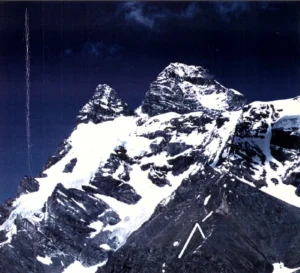
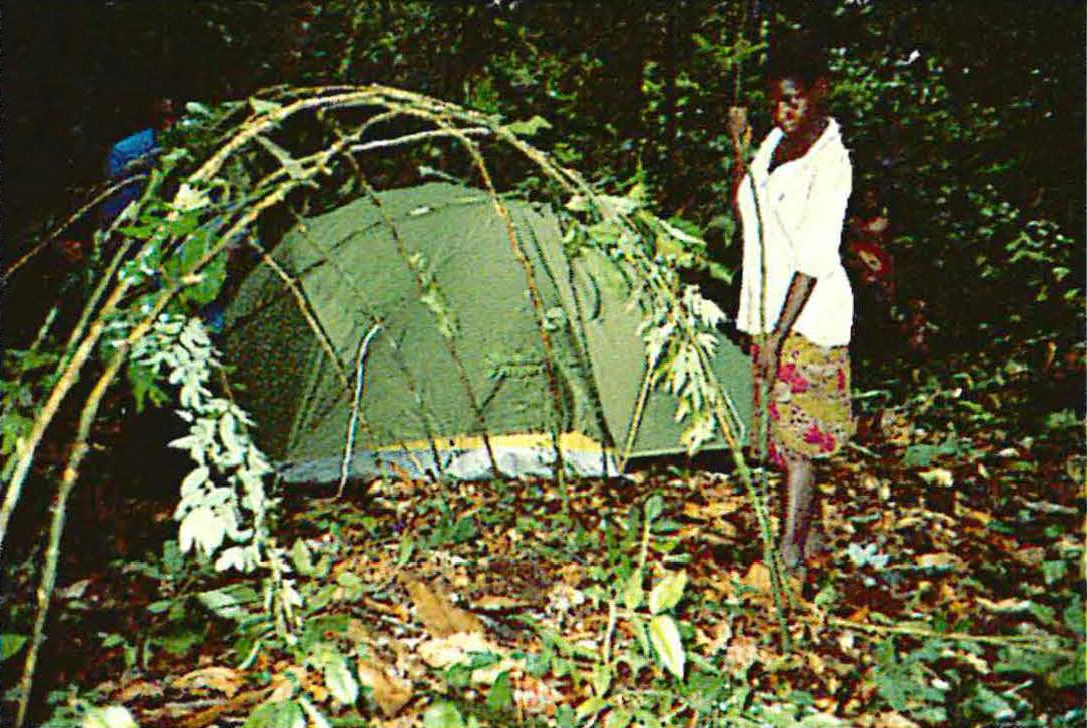
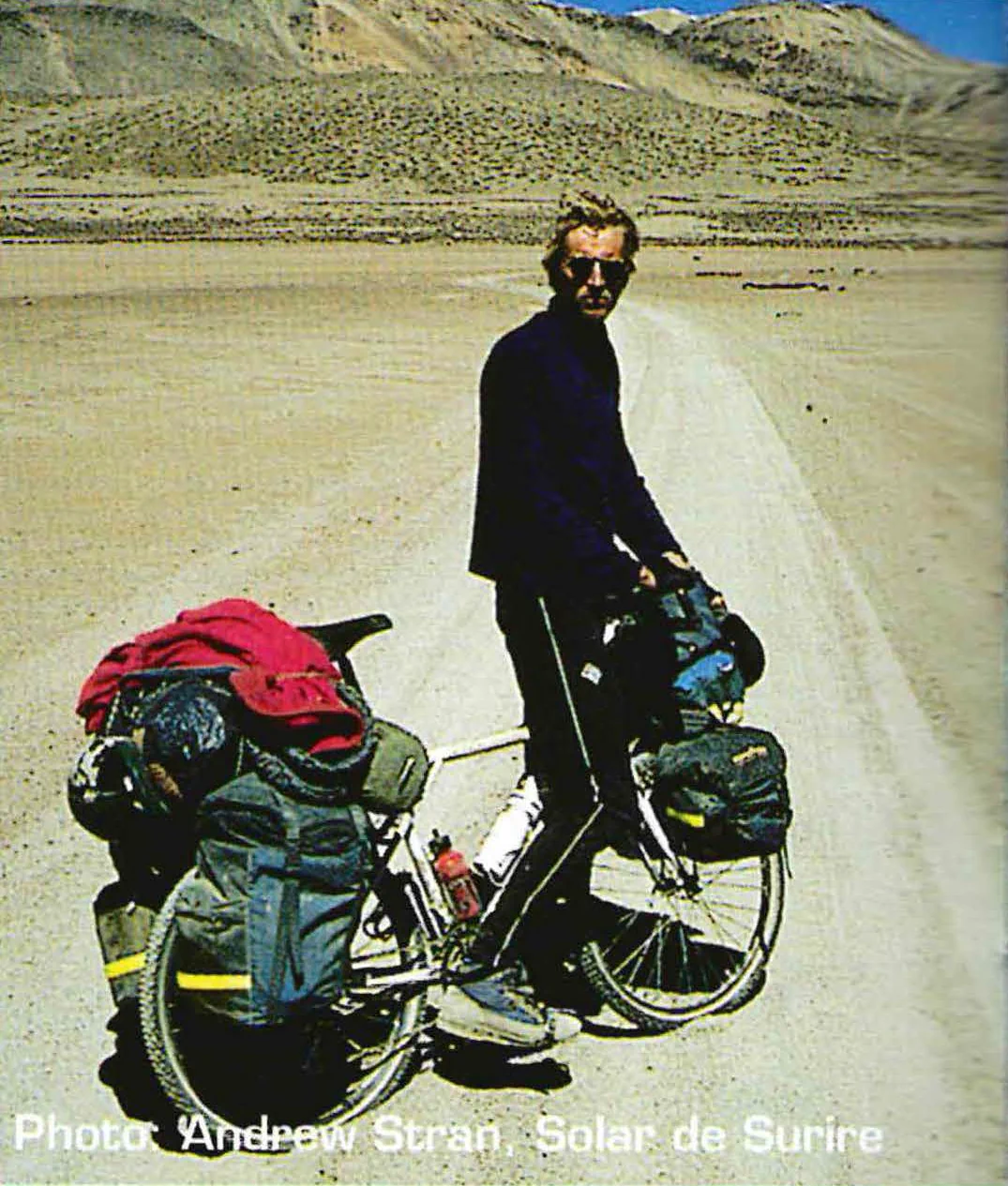
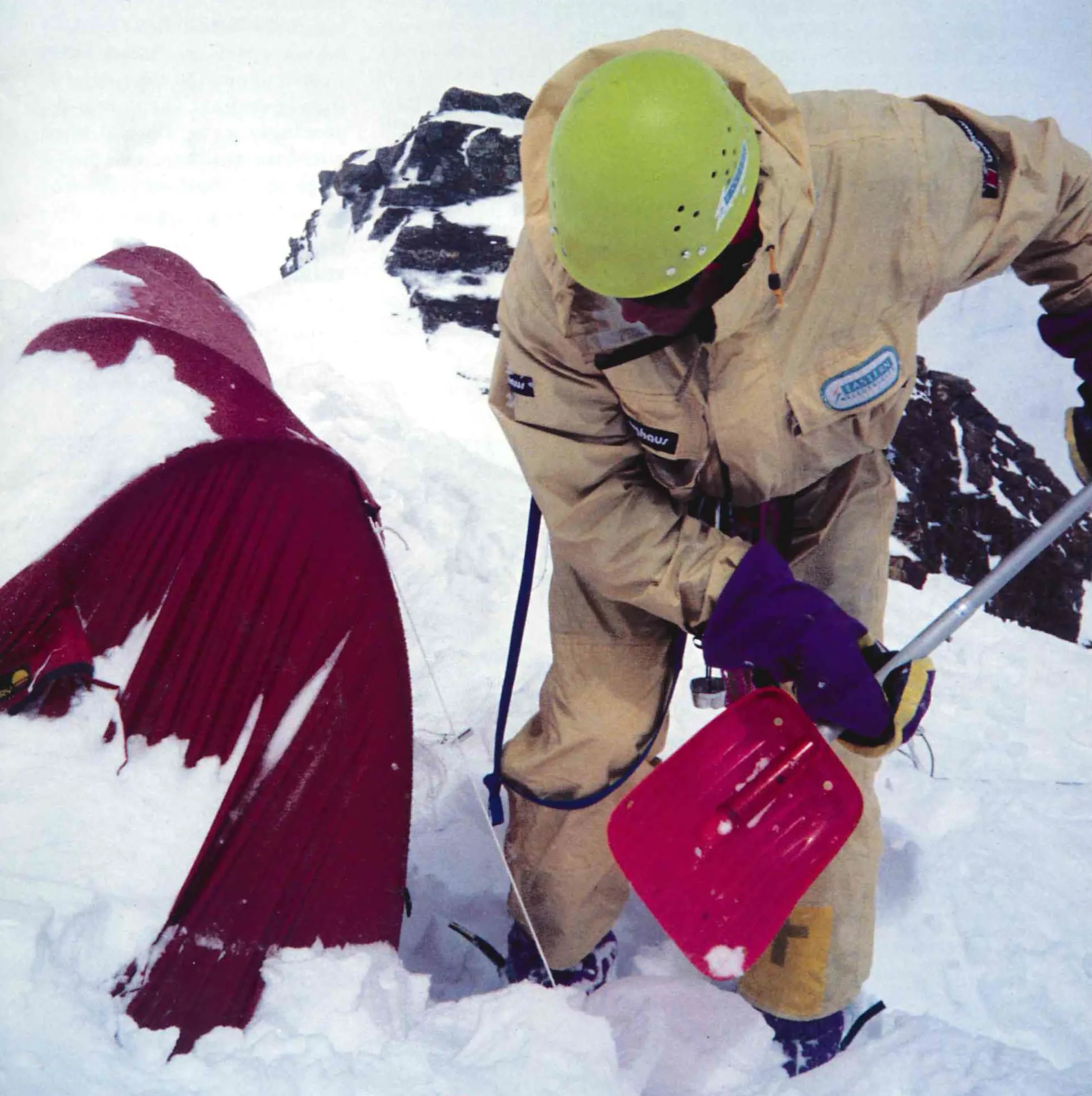
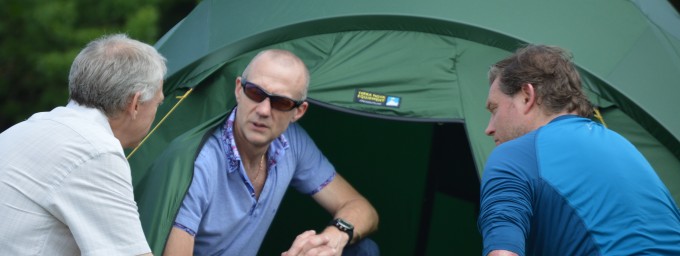
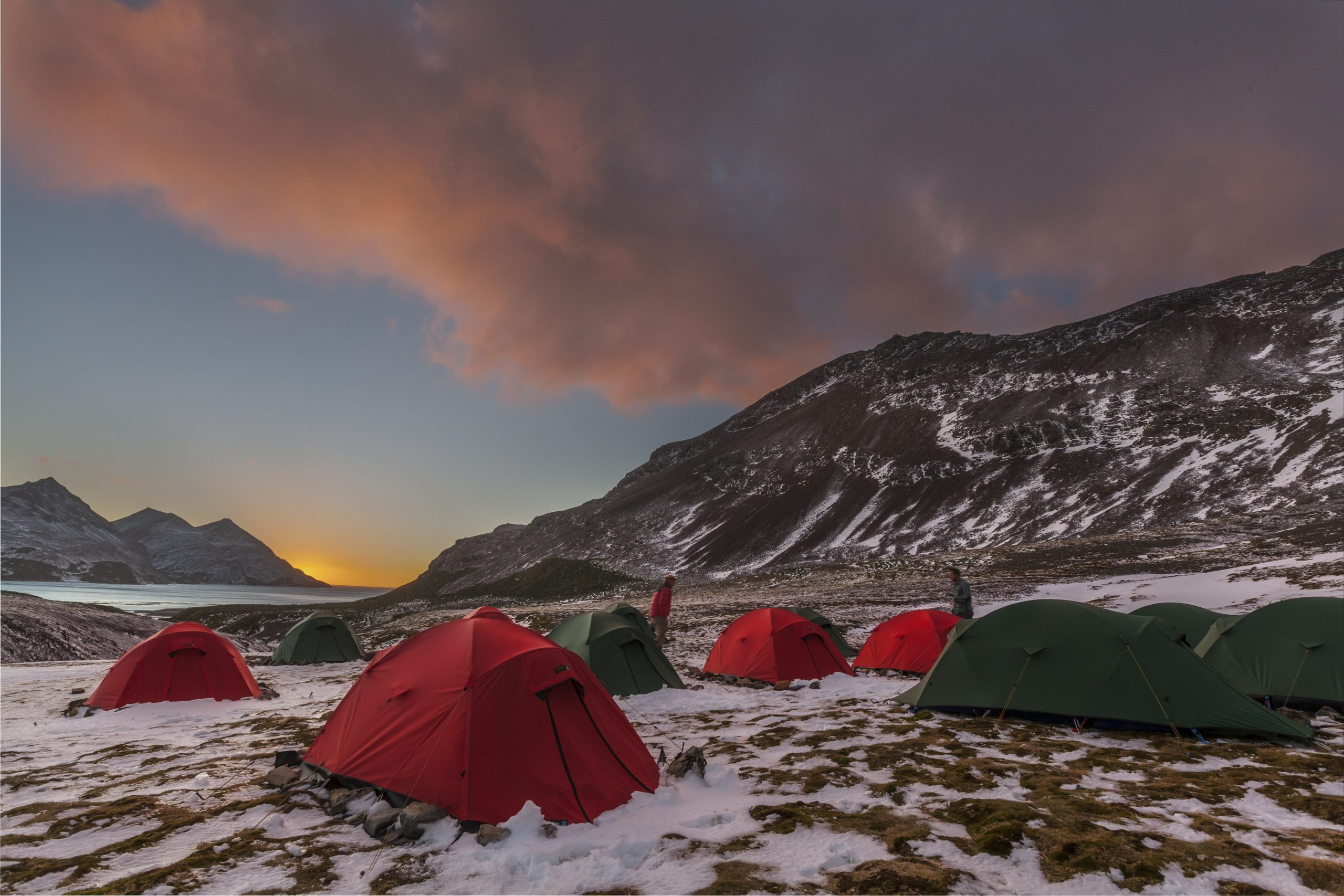
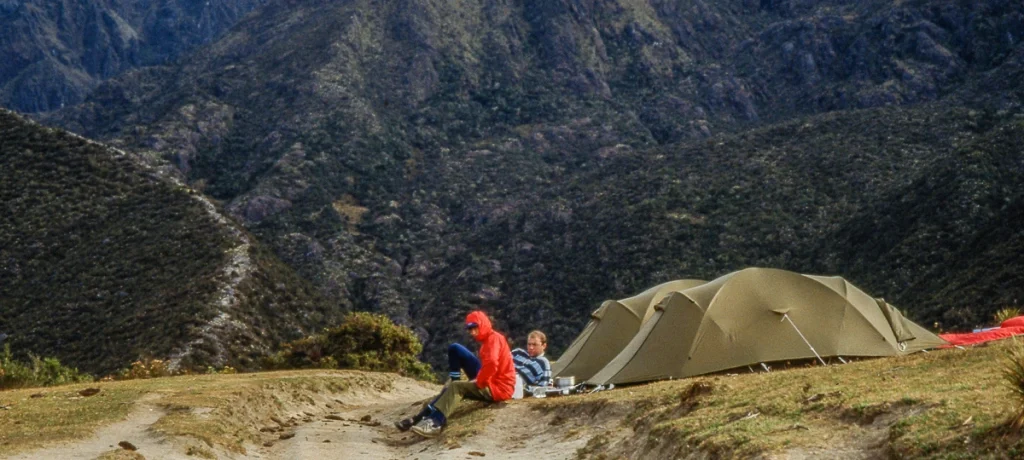
Photo: Roger Brookes / The British Hagshu-Kishtwar Expedition (1987)
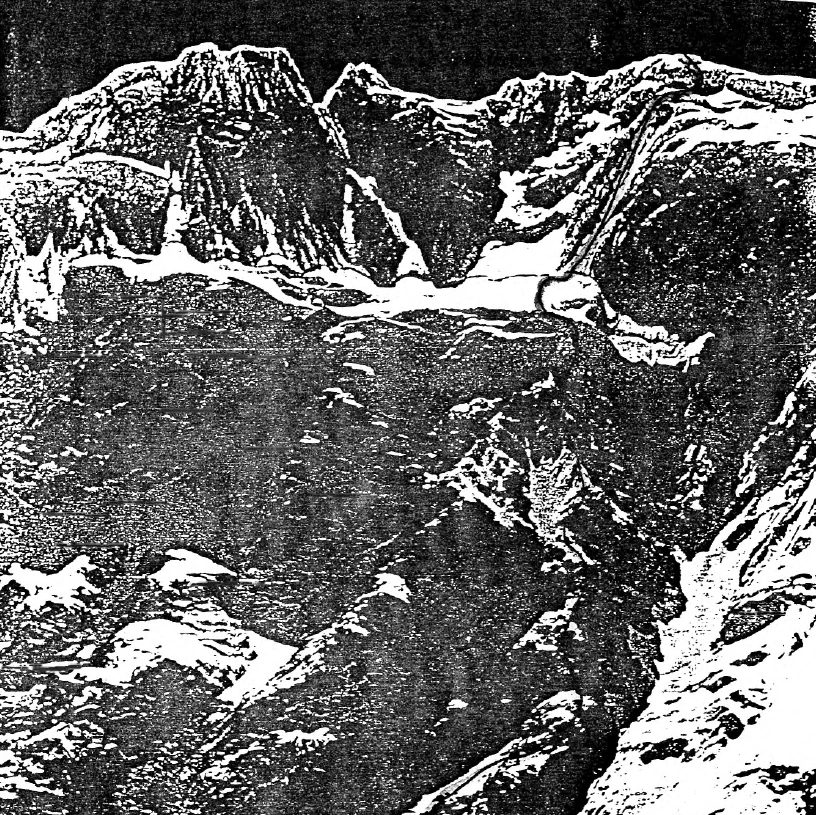
Hagshu had been tried twice before, by Pete Finclaire’s team in 1983, turned back by a washed-out bridge over the River Chenab, and by Mike Rosser’s expedition in 1985, beaten by the weather and losing a good deal of gear, including a BBC camera, in the gully on the south side. The photographs those parties left behind suggested Hagshu would suit a team on its first Himalayan trip. We applied to the Indian Mountaineering Federation, paid the peak fee, and set about working out what six people who had never done this before would actually need.
Getting there was its own expedition. We flew to Delhi with Thai Airlines, spent up to a week prising the freight out of customs, then took the bus to Jammu, seventeen and a half hours, arriving four hours late, and on to Kishtwar, another twelve hours to cover 220 kilometres. The road wound up the side of a gorge with the wheels of the bus inches from a thousand-foot drop.
The walls at the roadside carried painted safety slogans, which read better than they steered. “Life is wonderful, so ponder and think, don’t cut it short with speed and drink.” “Peep Peep. Don’t go to sleep.” “If your married, divorce or speed.” At Galhar, a terrace of four sheds with a post office and a hotel, the road ran out and the walk in began.
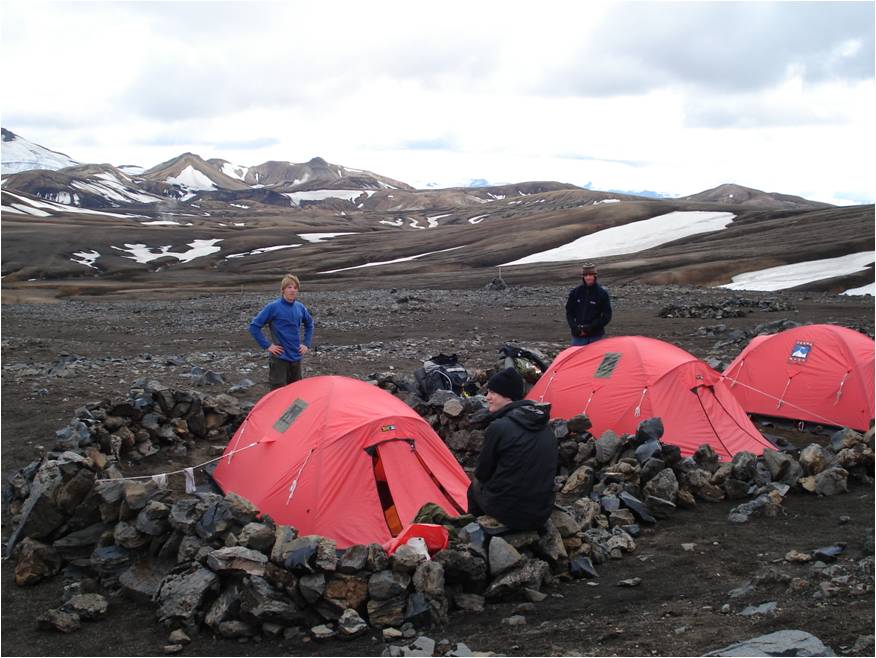
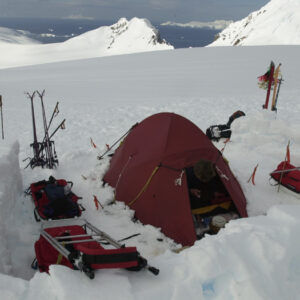
The walk to base camp took eight days on rice and lentils, a diet Stuart called totally inadequate, still hungry after eating it. Base camp sat on grass at 12,500 feet, beside a stream at the head of a glacial lake. Above it, on morainic debris at 14,500 feet, we set up advance base with three mountain tents on closed-cell foam, and this is where the gear started to matter.
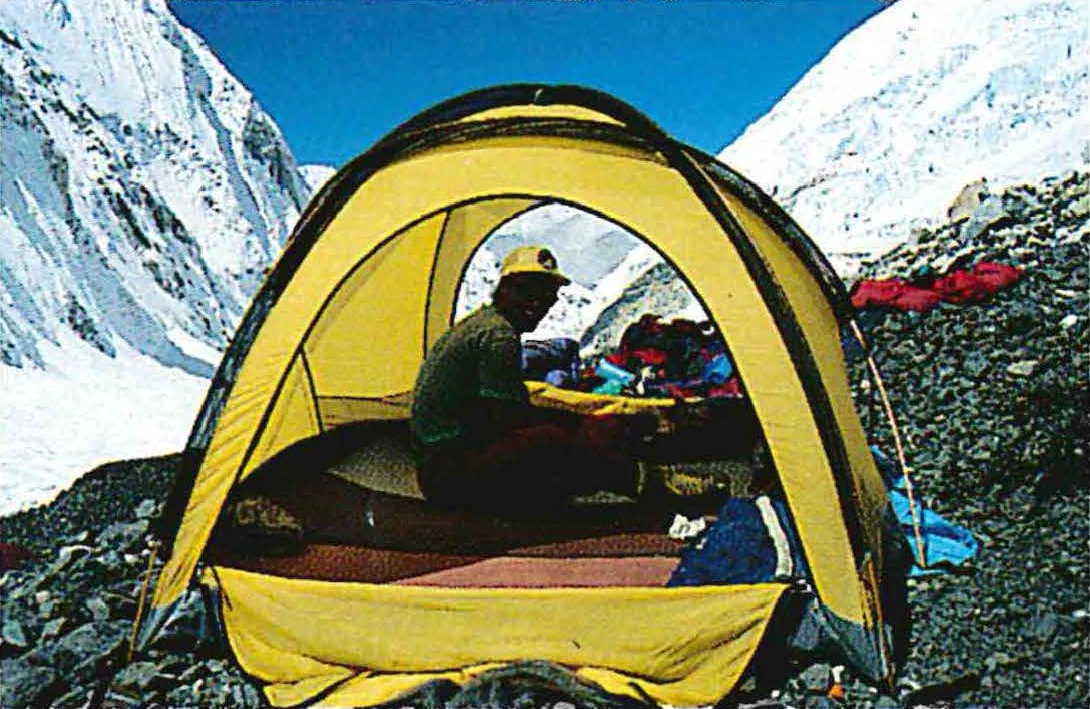
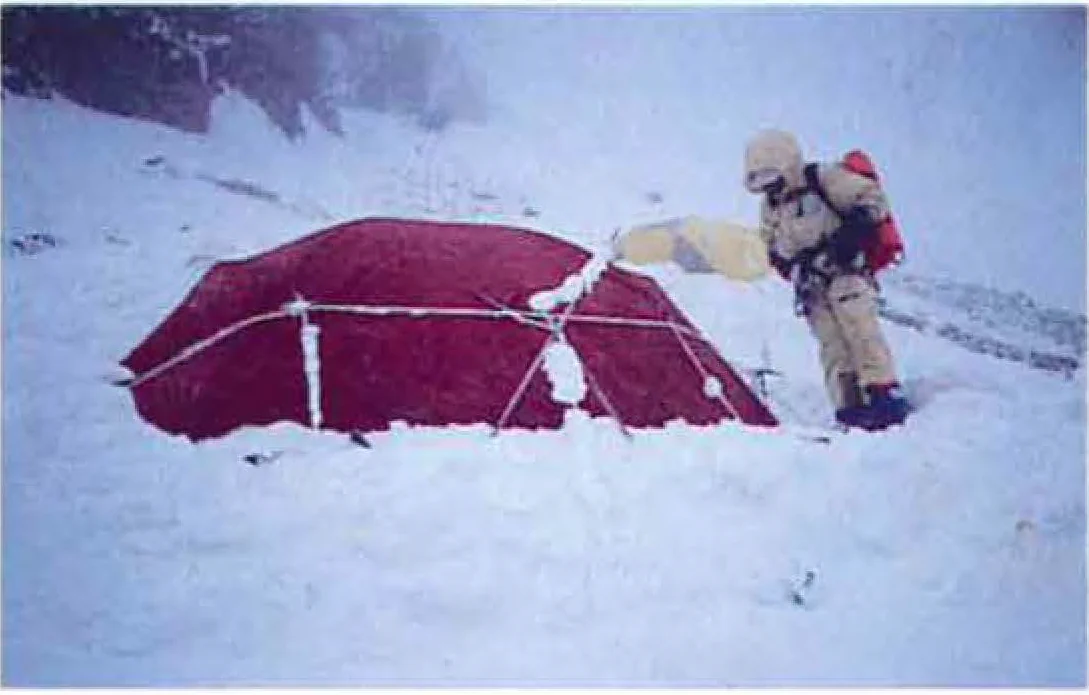
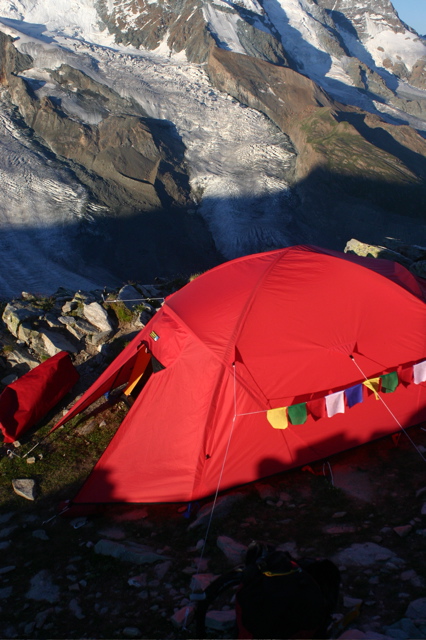
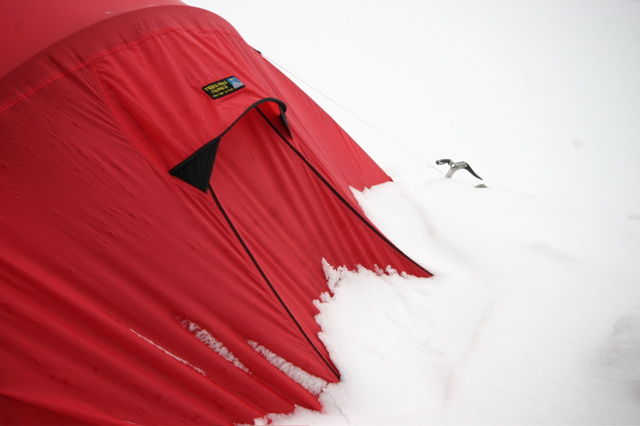
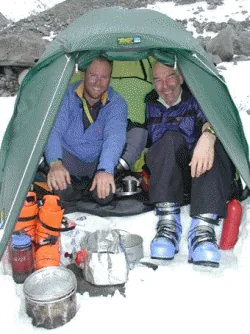
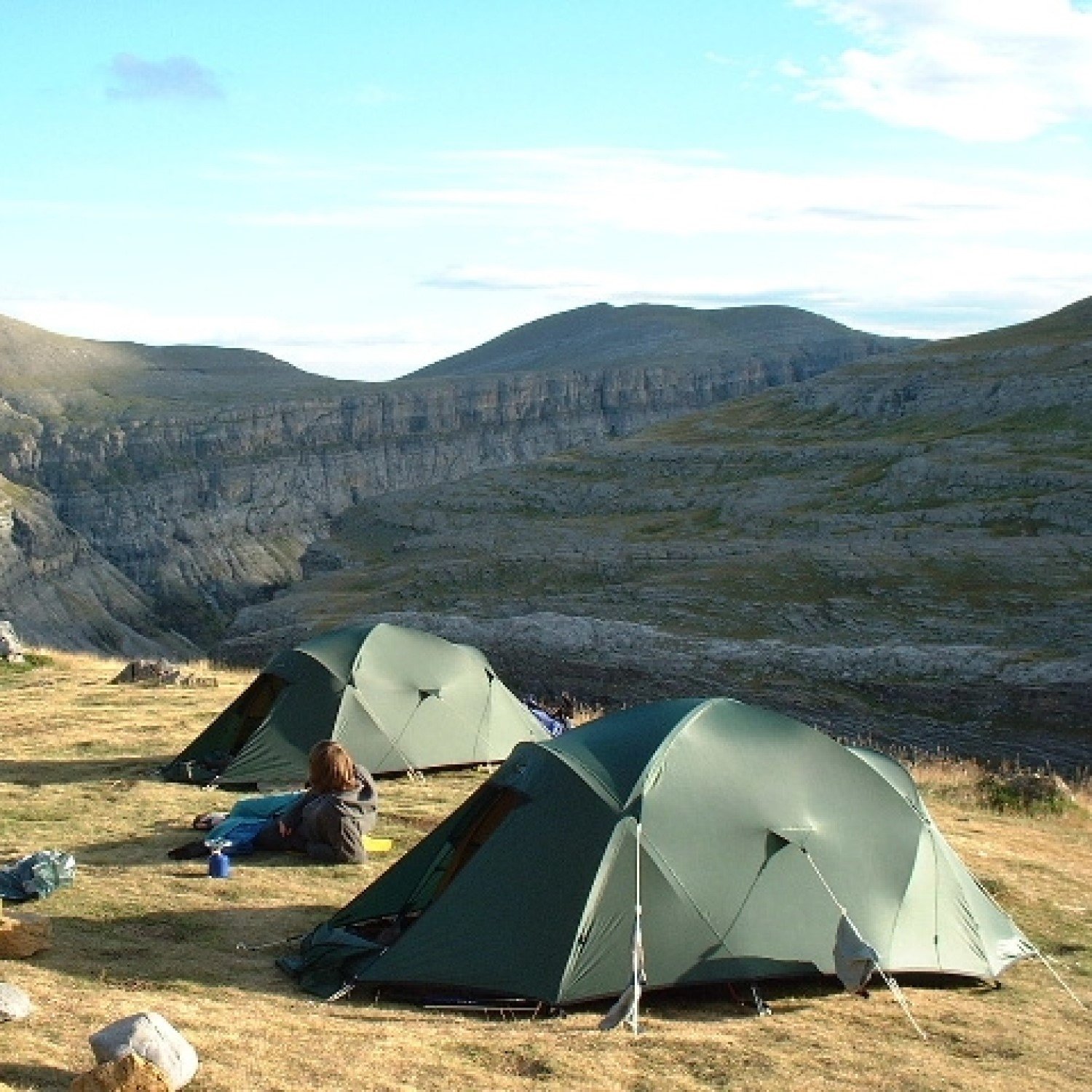
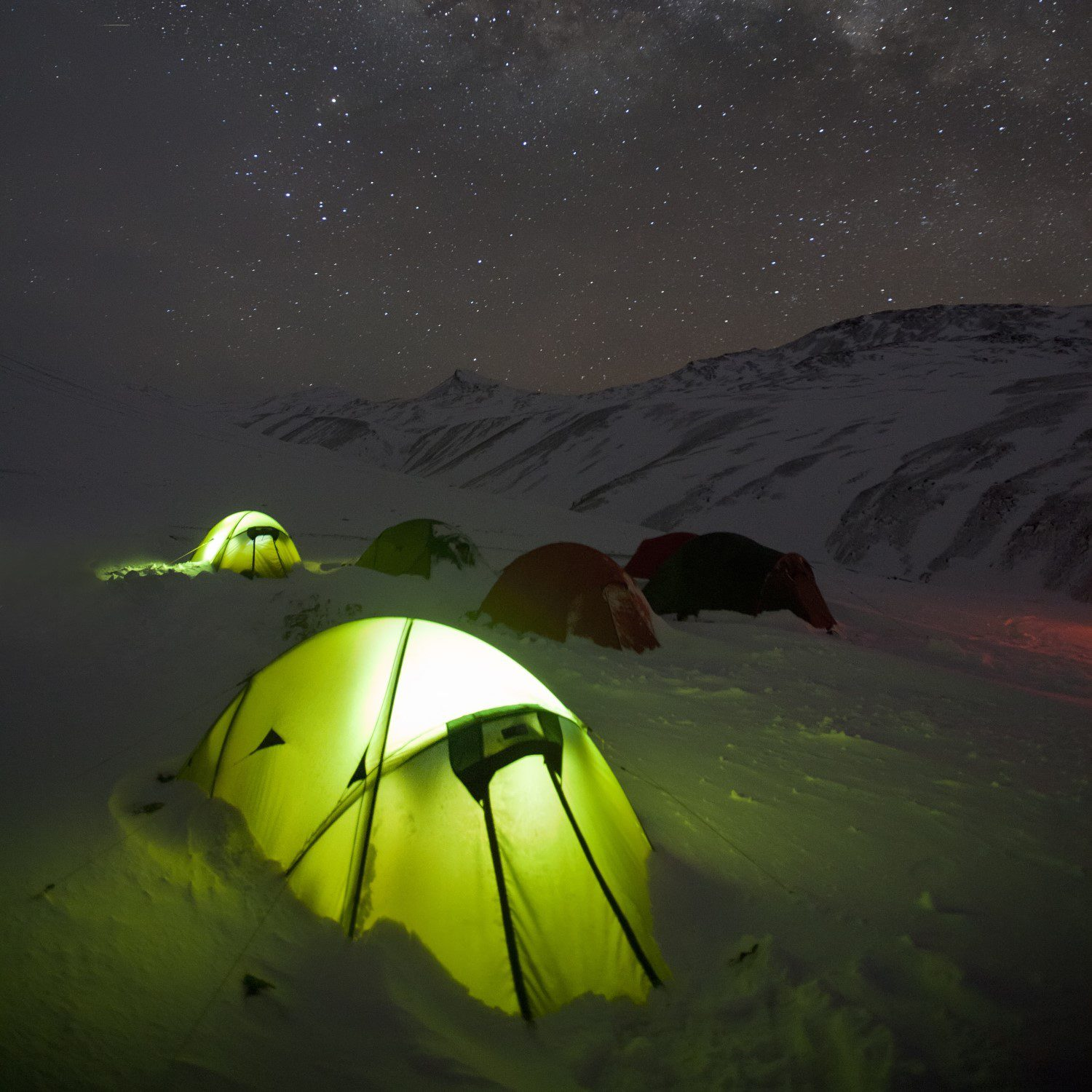
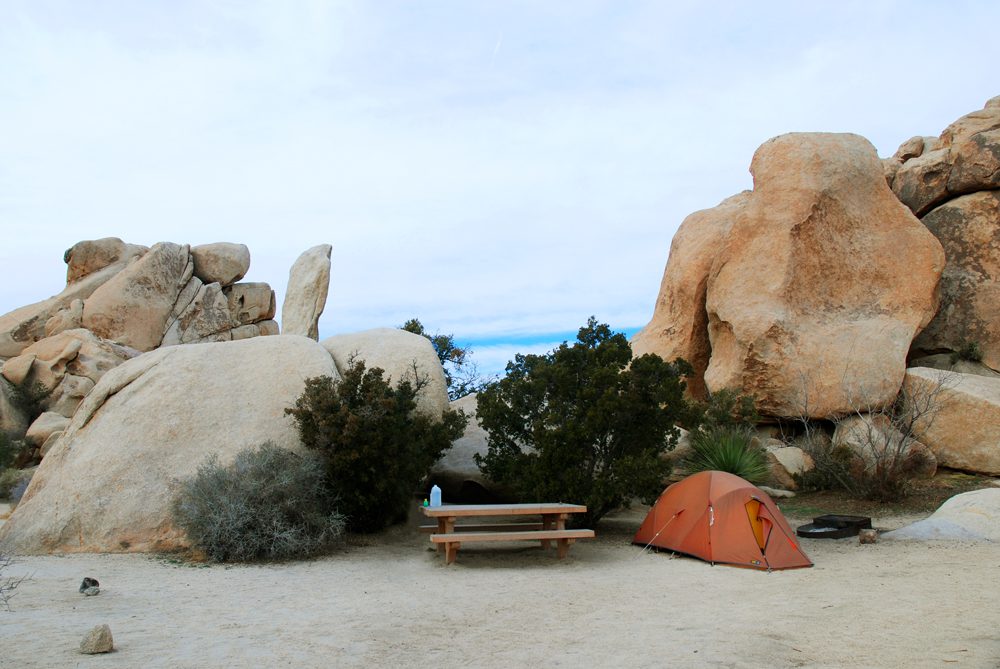
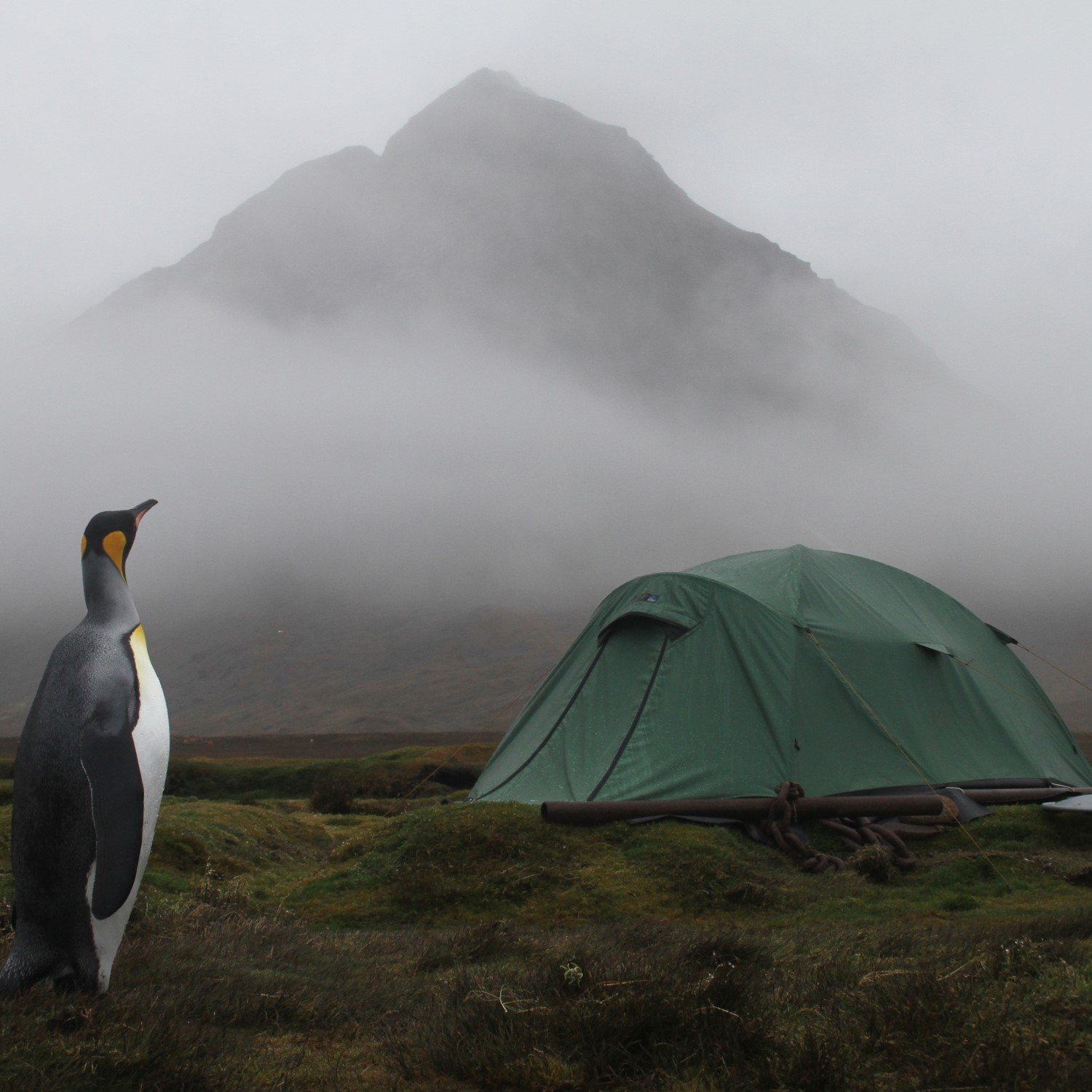
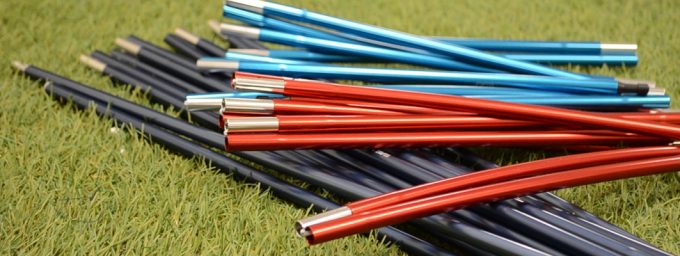
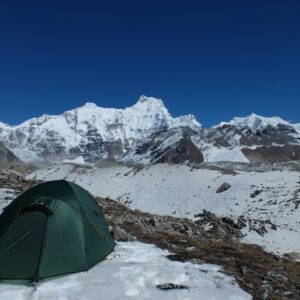
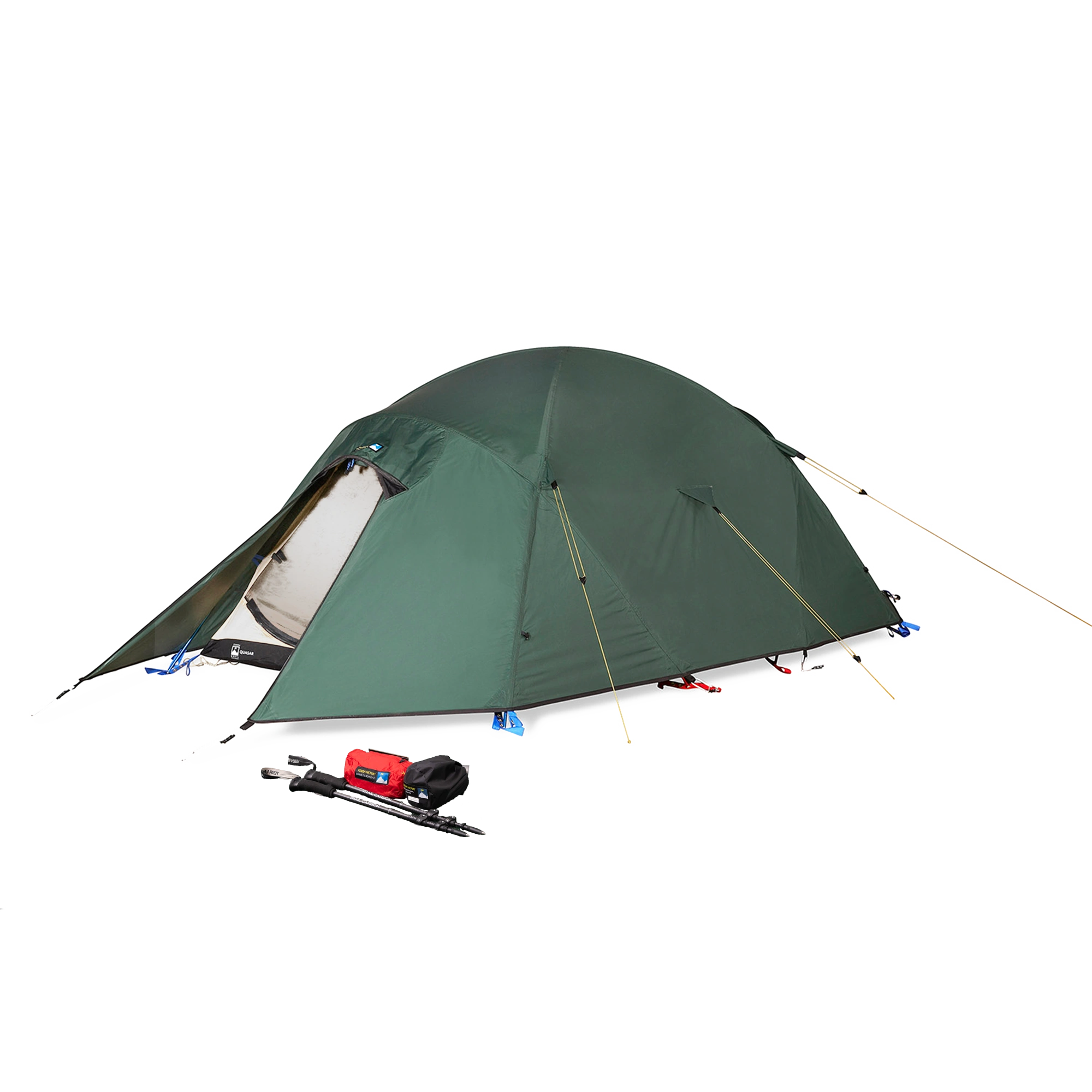
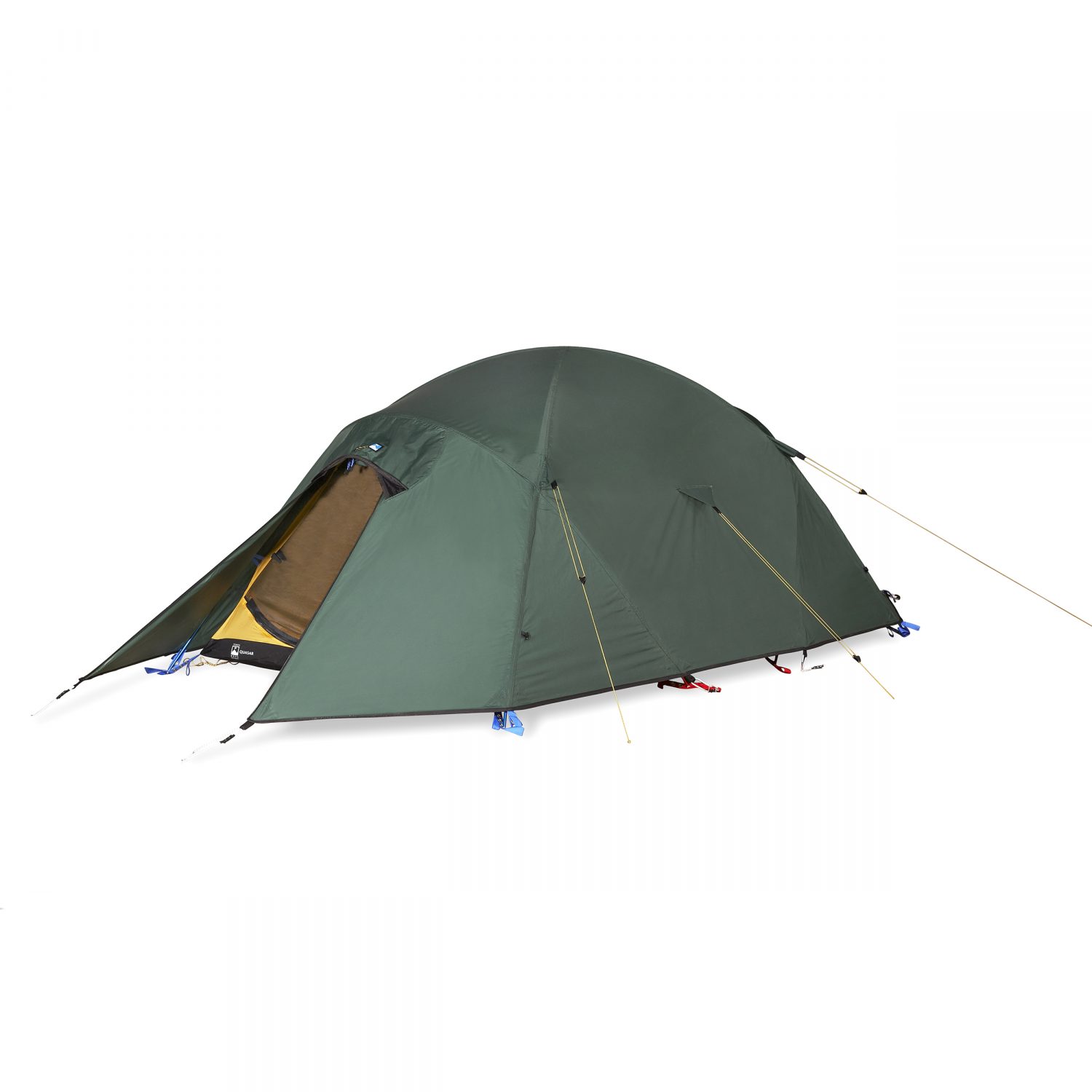
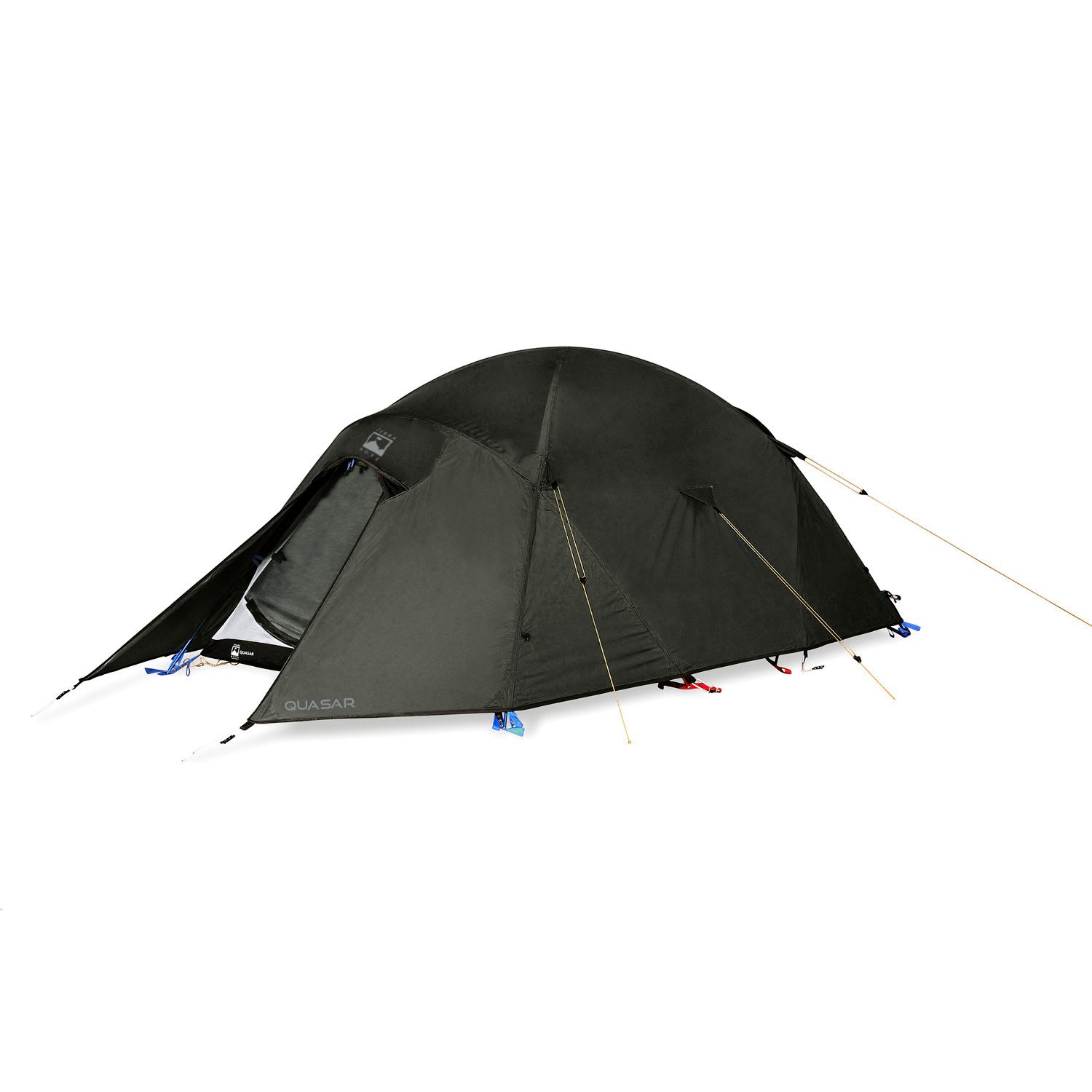
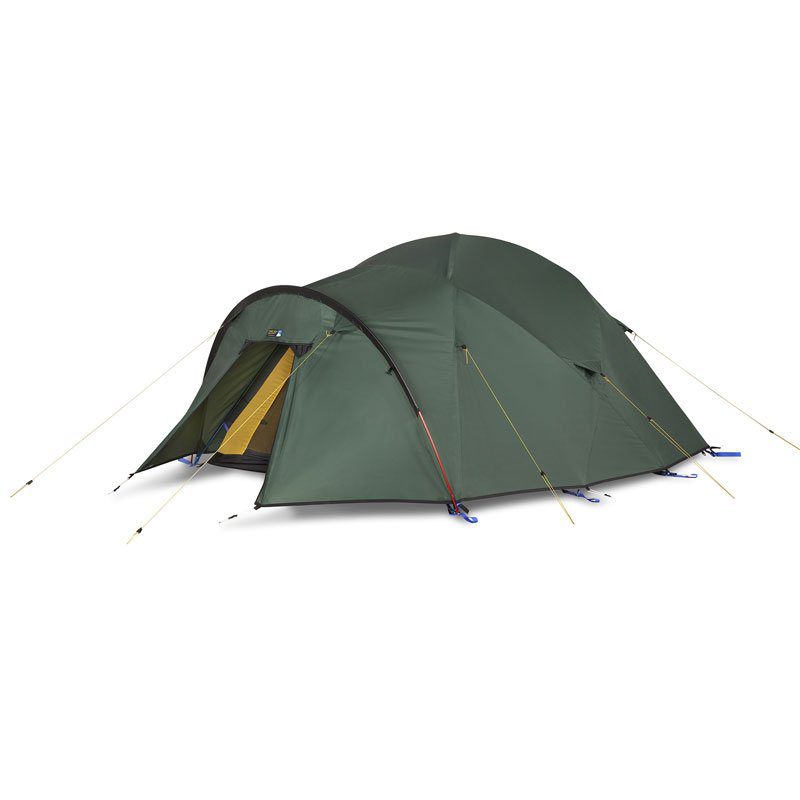
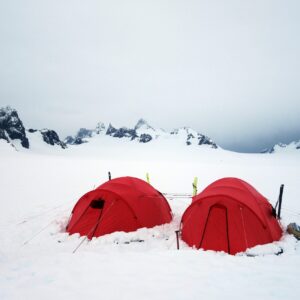
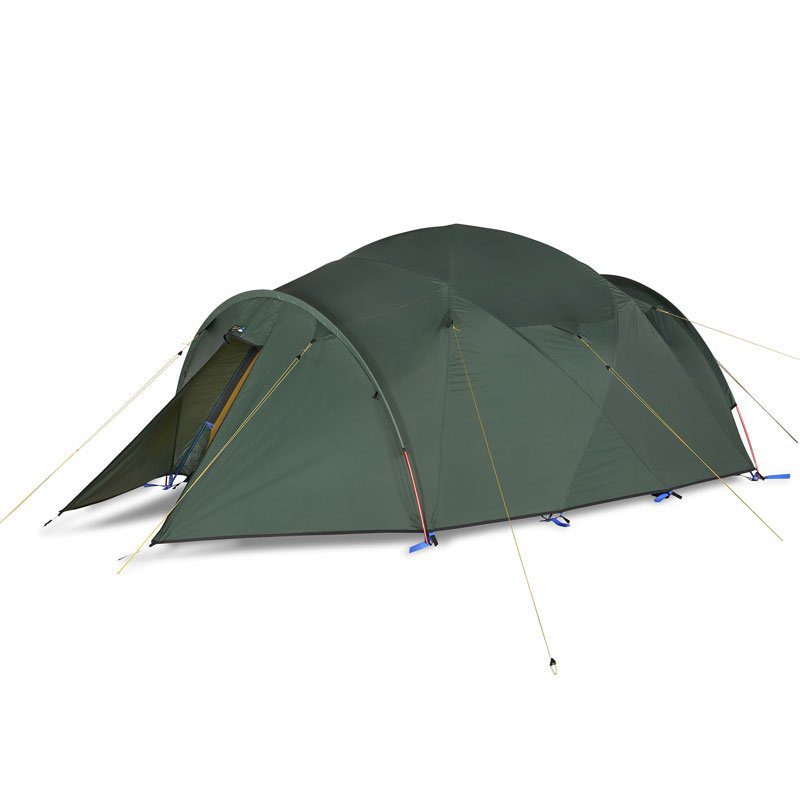
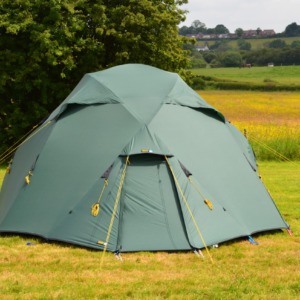
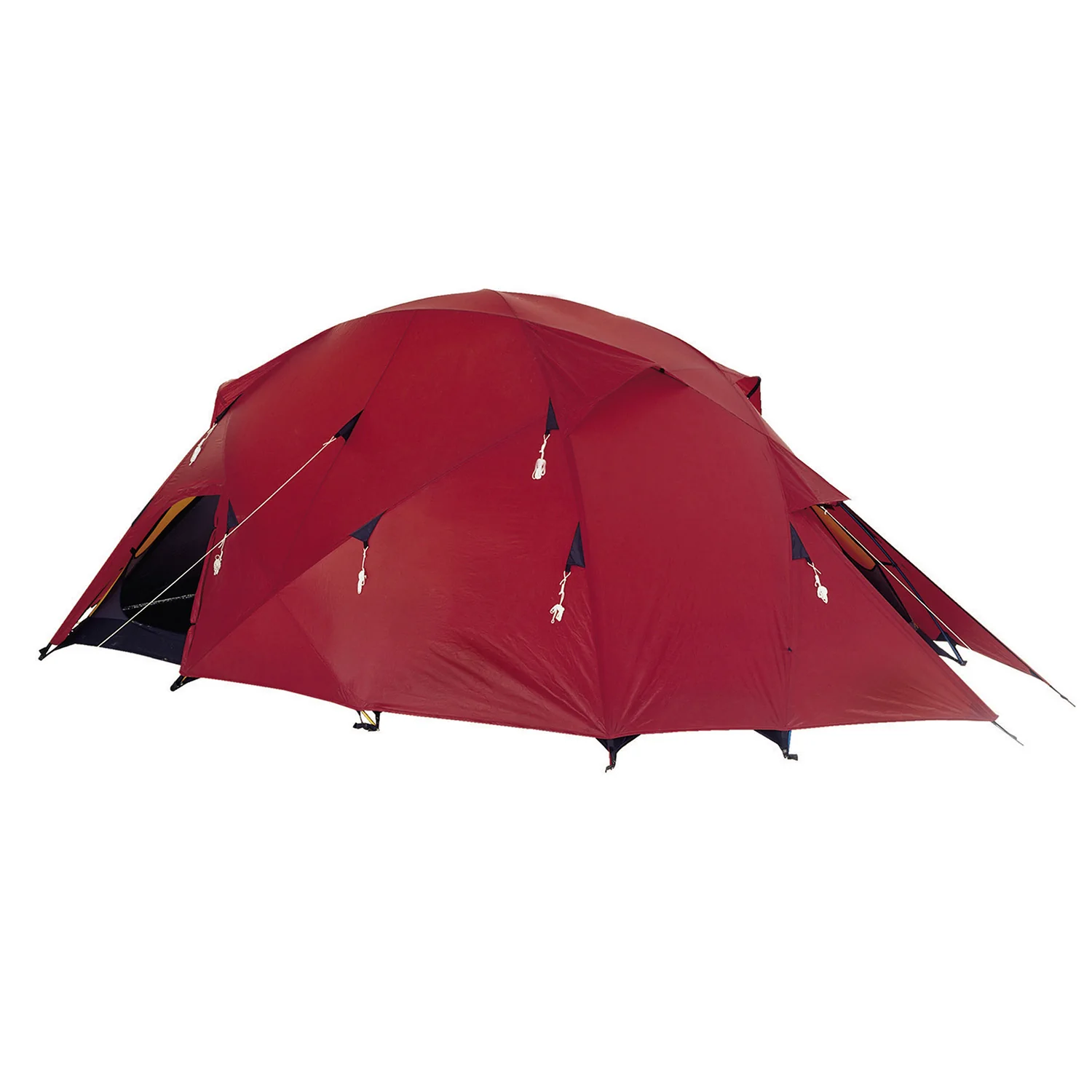
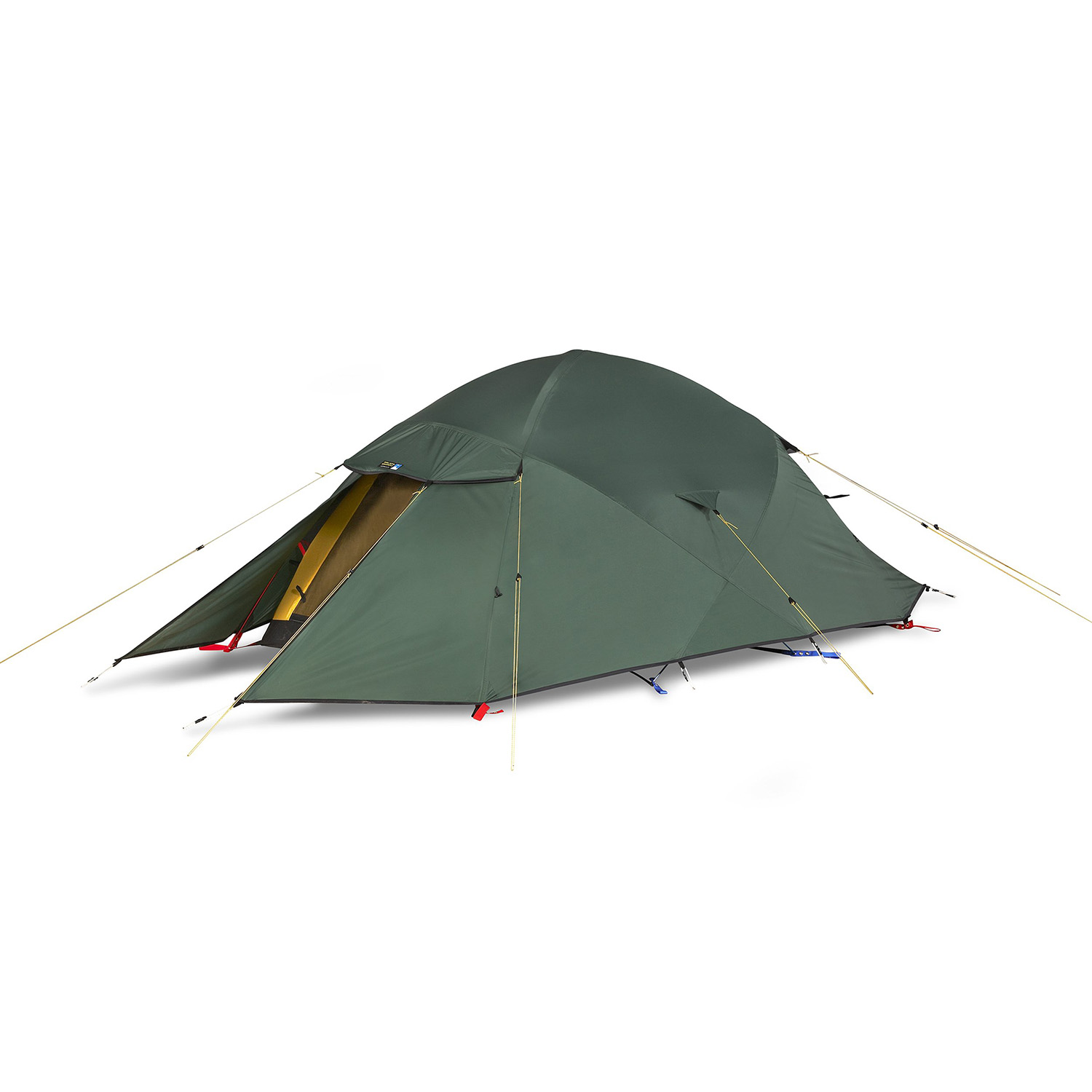
Advance base held a Wild Country Mountain Quasar, a two-man dual-skin geodesic dome with a snow valance, a Phoenix dome, and a second-hand Salewa. Up there all three were tested properly, and the difference showed. The Wild Country and the Phoenix proved windproof, waterproof and snowproof, and with careful ventilation the condensation could be virtually eliminated. The Salewa suffered badly from condensation and leaked when it rained. We were fortunate the weather that year was as kind as it was, and honest reporting means saying the Quasar was never really pushed to its limit, but it did everything asked of it and stayed dry inside, which is more than one of its neighbours managed.
The gloves were a more mixed story, and it is worth telling straight. We took Wild Country pile-lined Mountain Mitts with fingered thermal inner gloves, from Wild Country and Wintergear. The thermal undergloves were invaluable. The mitts themselves were another matter. They were fine for straightforward snow plodding, but they were criticised for being clumsy, the wrist strap kept tangling in our ice axe loops, and they were not as warm as we had expected. The Goretex ski gloves the others carried worked better for handling gear. Good kit and disappointing kit, on the same trip, from the same cupboard, that is roughly how equipment reports go when they are being truthful.
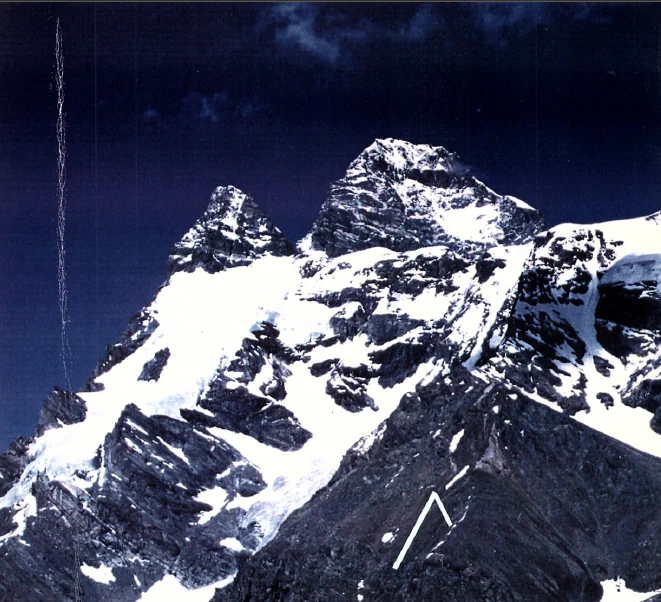
The two obvious lines up Hagshu were the central ridge and the gully to the right of it. Rosser’s team had chosen the gully and been avalanched out of it, so the ridge it would be. Through the second half of August we ferried loads, dug snow caves, and picked at the lower slopes in weather that clagged in and cleared and clagged in again. One night Stuart and Alan tried for the second snow band and managed barely 500 feet in an hour before a snow shower gave them the excuse to retreat. The falling rock and ice never really stopped, and a spectacular rockfall came down the lower part of the Rosser gully, the very ground we would have to cross to reach the ridge.
The summit attempt, when it finally came, was four days and five nights of the hardest work any of us had done. Stuart reached the bivouac ledge so spent that he lay on it with his rucksack still on for five minutes before he could summon the strength to take it off. They had started the night climbing twenty-five steps and then resting; by the end they were managing five, then a rest. Higher up they crossed Rosser’s abandoned high point, a video camera and two snow shovels, which was lucky, because Alan had lost a shovel head enlarging the ledge below.
They gained the crest of the ridge and dug a snow hole, elated, whooping, no one had been that high before. The next day the four set off for the summit at one in the afternoon, expecting to be back by eight. They reached the first rock step, then the bottom of the second, with 2,000-foot drops falling away to the east. And there it ended. Stuart took about six steps out towards the ridge, realised he was simply too tired to go on, and said so. A short conference found everyone else felt the same. They tied together and turned round, roughly 400 feet below the top. The descent was worse than the climb, Stuart retching every few minutes, a crampon working loose, the whole team lying down to sleep in the snow on the flat glacier bowl. They reached the snow hole at half past four in the morning.
How wrong can you be. We have just returned to base camp. Four days and five nights later.
That was Hagshu done. For four of the team, Stuart, Mark, Alan and Simon, the expedition was over, and they walked out with the liaison officer and the cook boy. But Roger Brookes and Andy Dunhill had arranged two extra weeks, and they were not finished. They kept a limited amount of food and gear, changed their objective, and turned to Chiring, 6,187 metres, a little further down the valley.
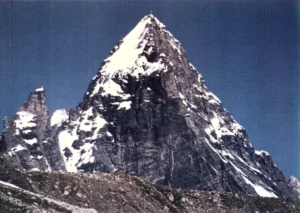
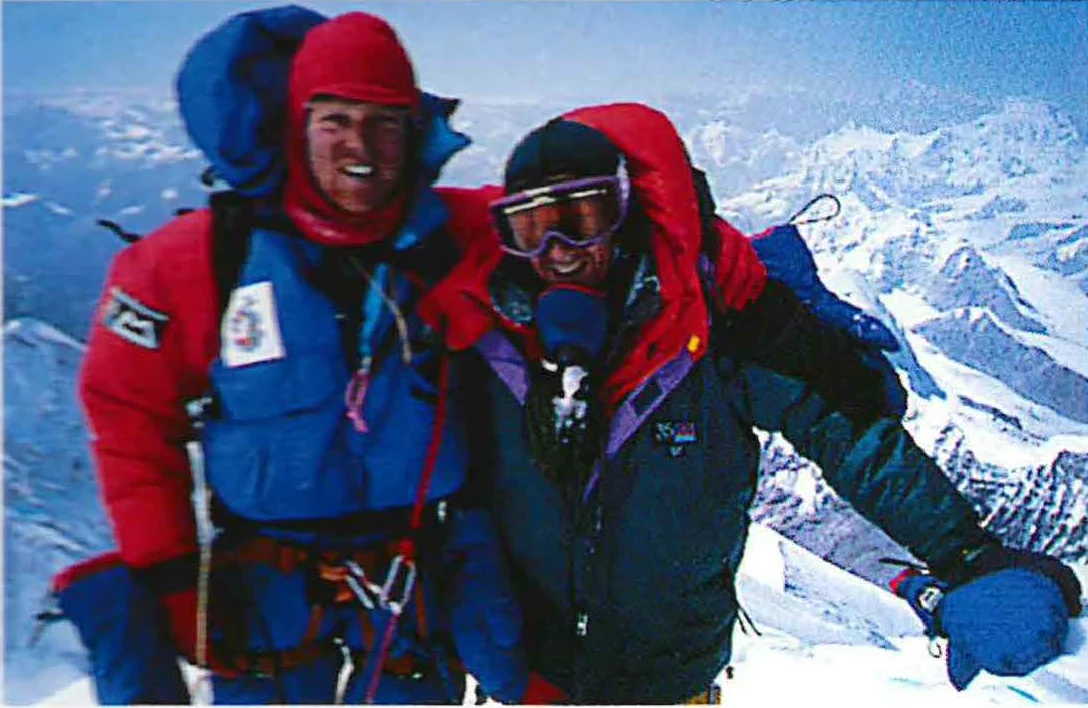
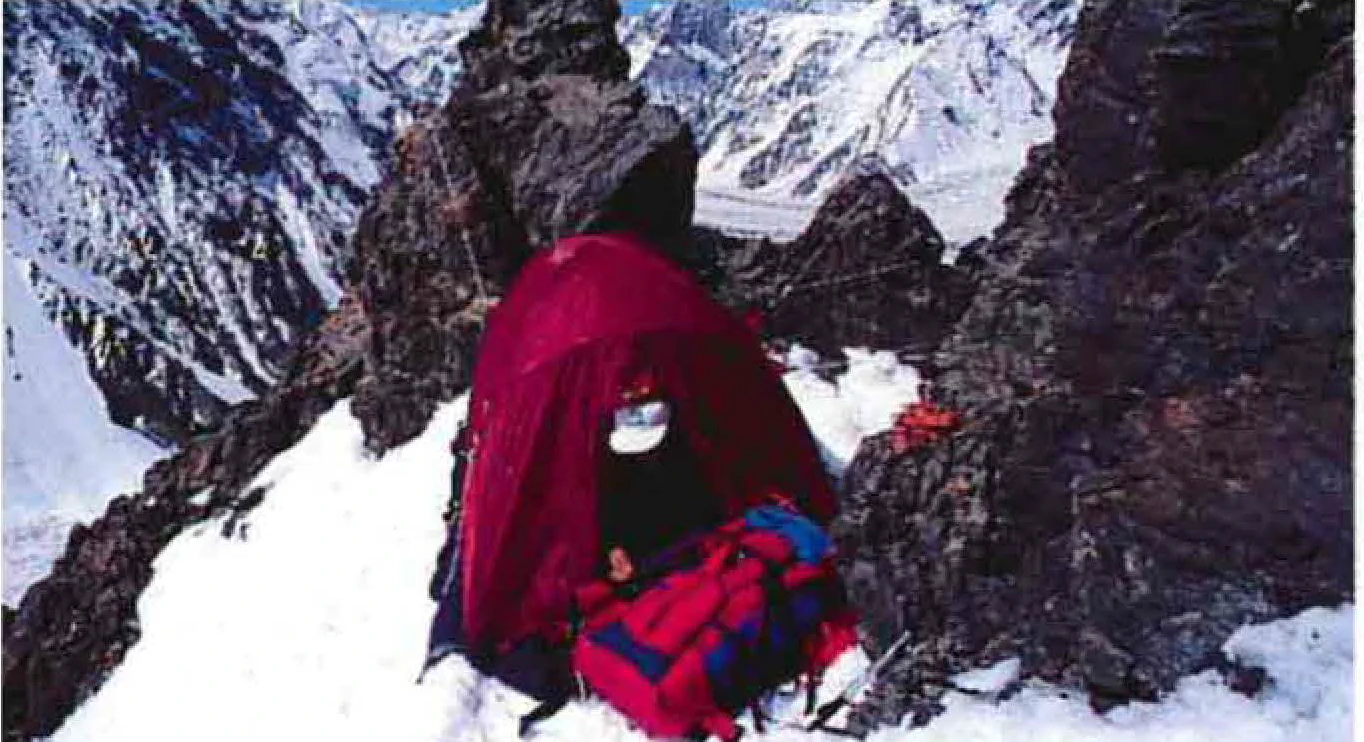
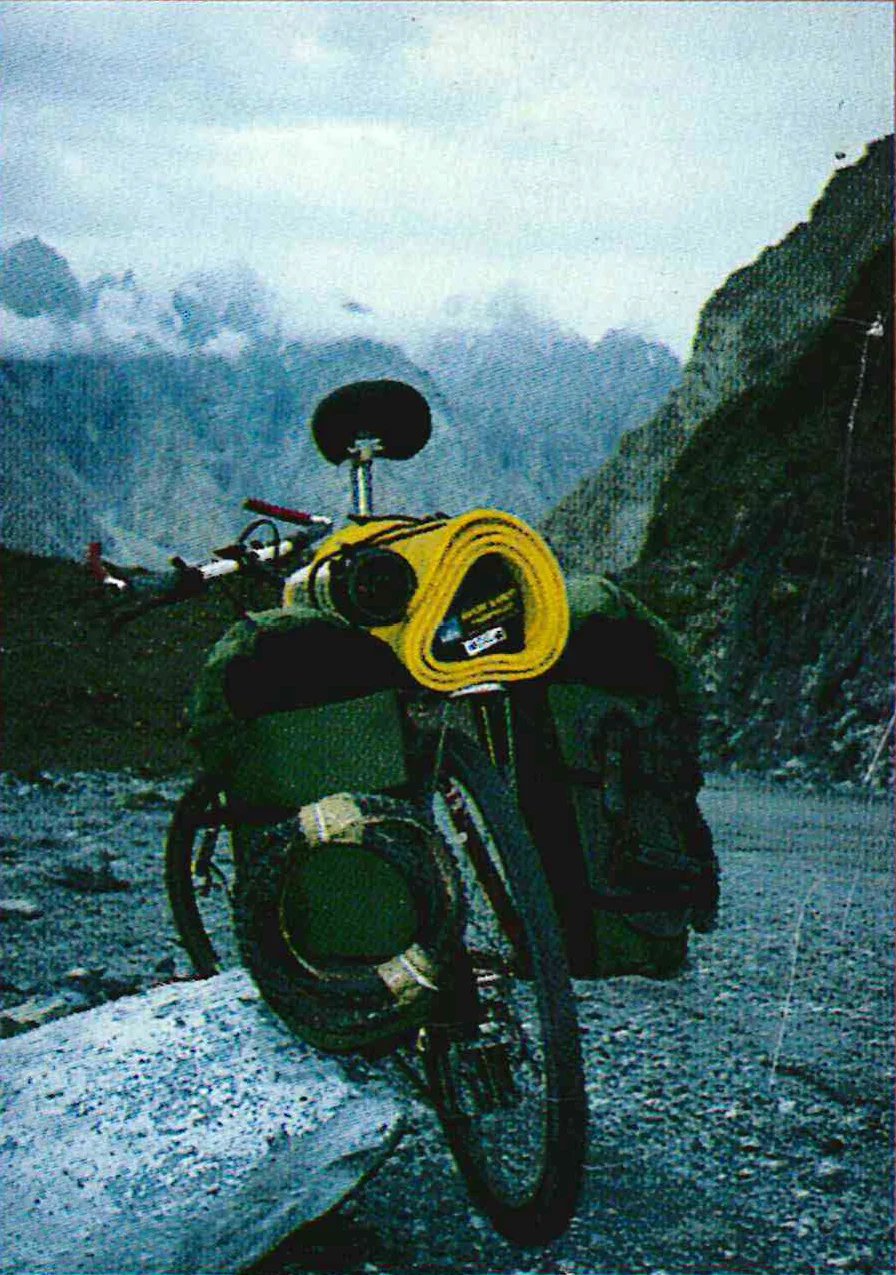
Photo: Andy Dunhill / The British Hagshu-Kishtwar Expedition (1987)
The two of them made a couple of errors getting to it, losing 500 feet to a hanging glacier they had not spotted, and once nearly turning back when storms built over the peaks to the west. They sat that one out on a ledge below a rock wall and woke to brilliant sunshine. From a snow cave below the summit ice field they left at midnight, climbed through the night on ice of about 50 degrees, cold despite the full layered system, and reached the top by daybreak, watching the sunrise over Hagshu, the mountain the other four had so narrowly missed a few days before. To say they reached the summit is slightly misleading, as Andy honestly noted, they reached what they took to be the top and then found two further summits just beyond, perhaps 50 feet higher, unreachable across the cornices. With Roger’s feet frozen solid and frostbite a real worry, the south summit was where they stopped. They were not the first there. A blue supertape sling was already on top. Well, that’s life, Andy wrote.
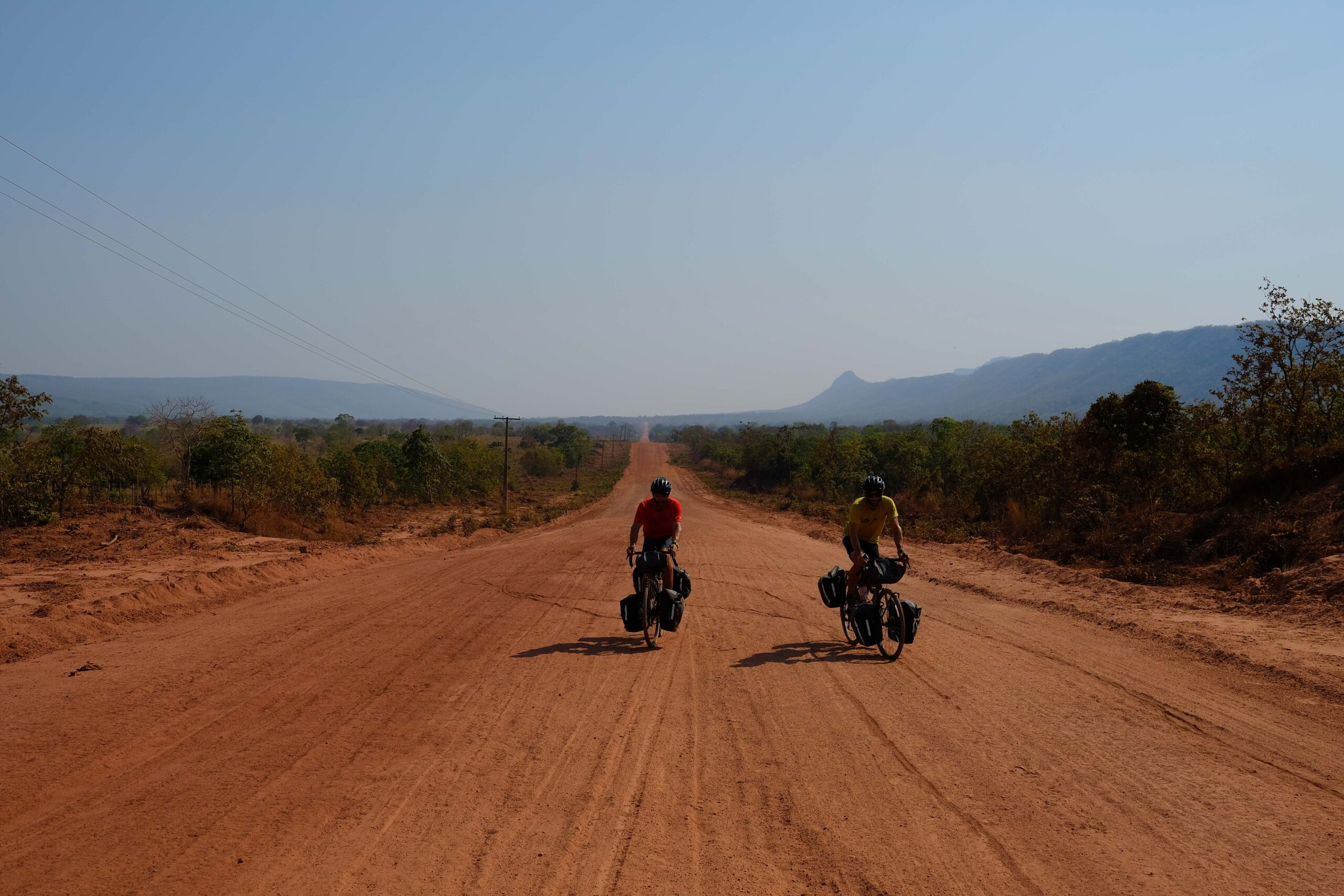
Roger and Andy walked out north over the Umasi La, a 17,000-foot pass into Zanskar, on their last 35 rupees, selling their climbing ropes to the villagers of Sumcham to buy food along the way. The rest of it was rather less heroic. Between us the team collected Delhi belly, giardia, salmonella, campylobacter, sunburnt retinas, and in one case four weeks of illness that only got diagnosed back in Sheffield. We failed on what we came to climb, and two of us climbed something else. We were happy to have climbed a mountain. Which one, as the report concluded, is immaterial.
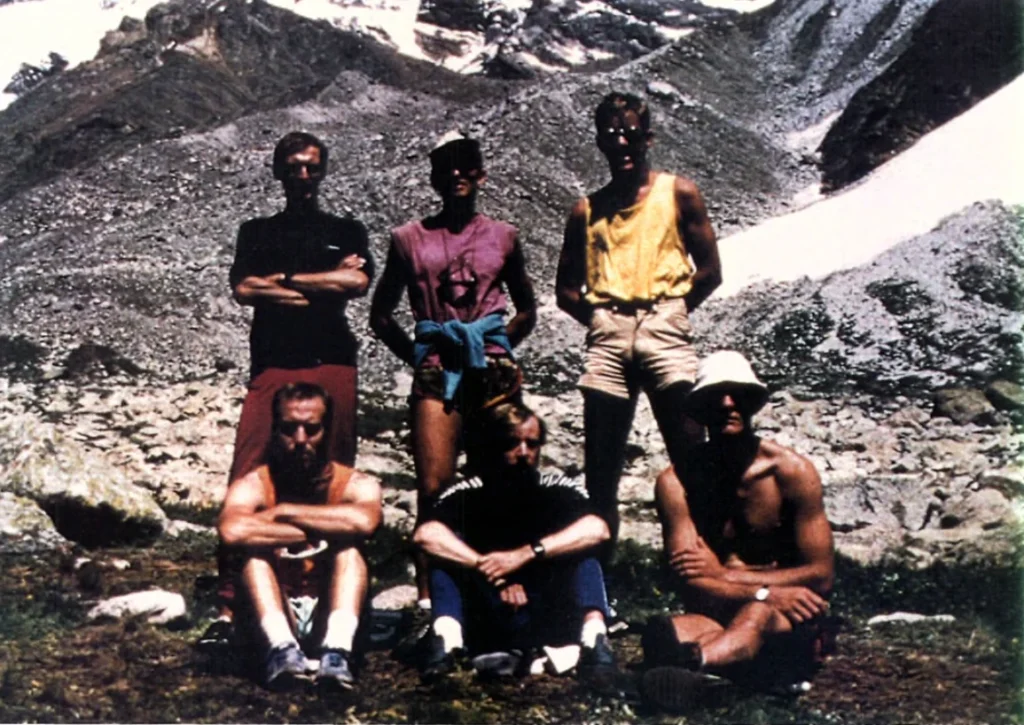
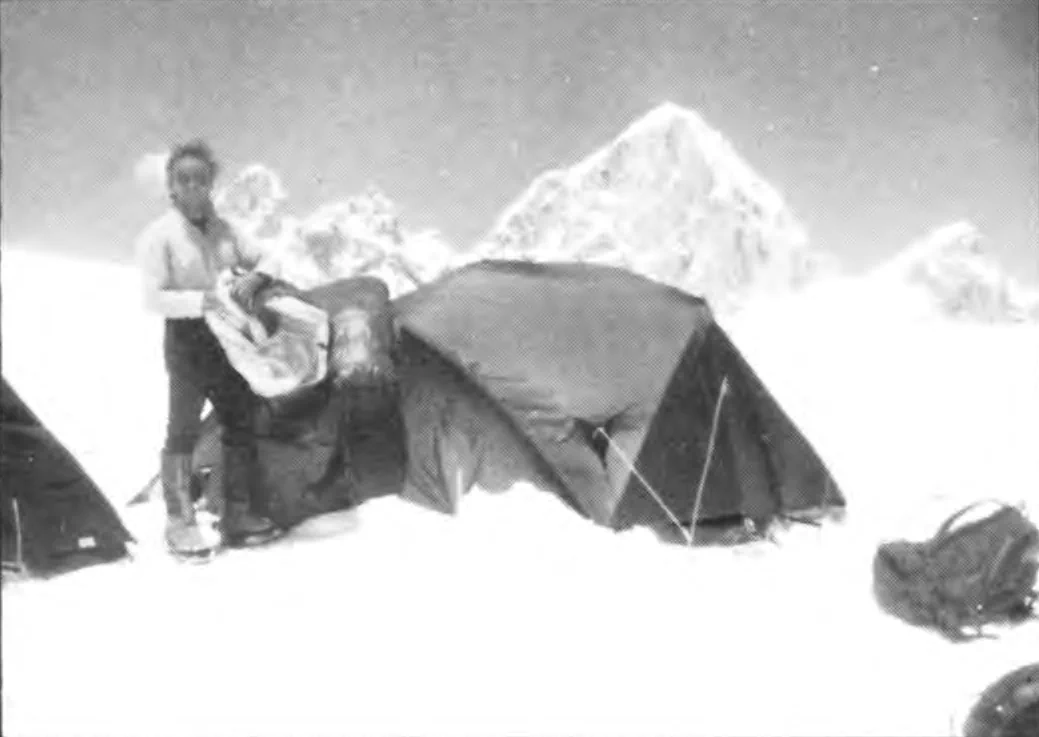
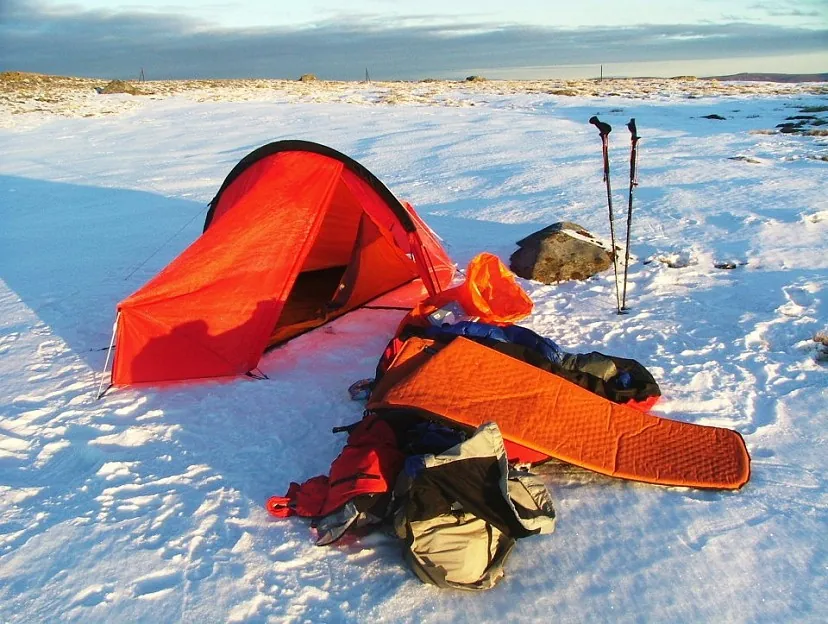
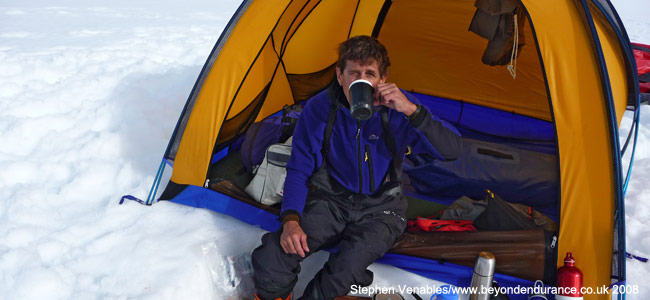
Photo: Roger Brookes / The British Hagshu-Kishtwar Expedition (1987)
The British Hagshu-Kishtwar Expedition 1987, from the diaries of Stuart Gascoyne (Hagshu) and Andy Dunhill (Chiring). Patron: Doug Scott. Equipment report by Roger Brookes.
The Mountain Quasar and the Mountain Mitts carried on this expedition were made by Wild Country. Wild Country, together with Wintergear, is part of the story of Terra Nova Equipment.
-
SALE FEATURED


Limited Edition Quasar Tent & Bundle
-
FEATURED
Murlan Elite 2 Tent
-
Expedition Quasar Tent
£1,100.00 Add to Pack This product has multiple variants. The options may be chosen on the product page -
Quasar Tent
-
Expedition Hyperspace Tent
£1,450.00 Add to Pack This product has multiple variants. The options may be chosen on the product page -
Expedition Terra Firma Tent
£1,800.00 Add to Pack This product has multiple variants. The options may be chosen on the product page -
Expedition Cosmos Tent
£5,600.00 Add to Pack This product has multiple variants. The options may be chosen on the product page -
Outlet – Murlan Elite 2 Tent – Grade B
-
SOLD OUT
Expedition Super Quasar Tent
£1,200.00 Add to Pack This product has multiple variants. The options may be chosen on the product page



Planning Something Ambitious?
Our archive of expeditions isn't marketing; it's a record of what our tents, shelters, and apparel have actually survived, written by the people who were there. From first ascents in the Karakoram to four months on Ellesmere Island. But our history isn’t just about where we’ve been; it’s about where we’re going next.
We support a small number of genuine, objective-led expeditions every year. If you’re putting together a capable team with a clear plan and a story to tell, we’d love to hear about it.